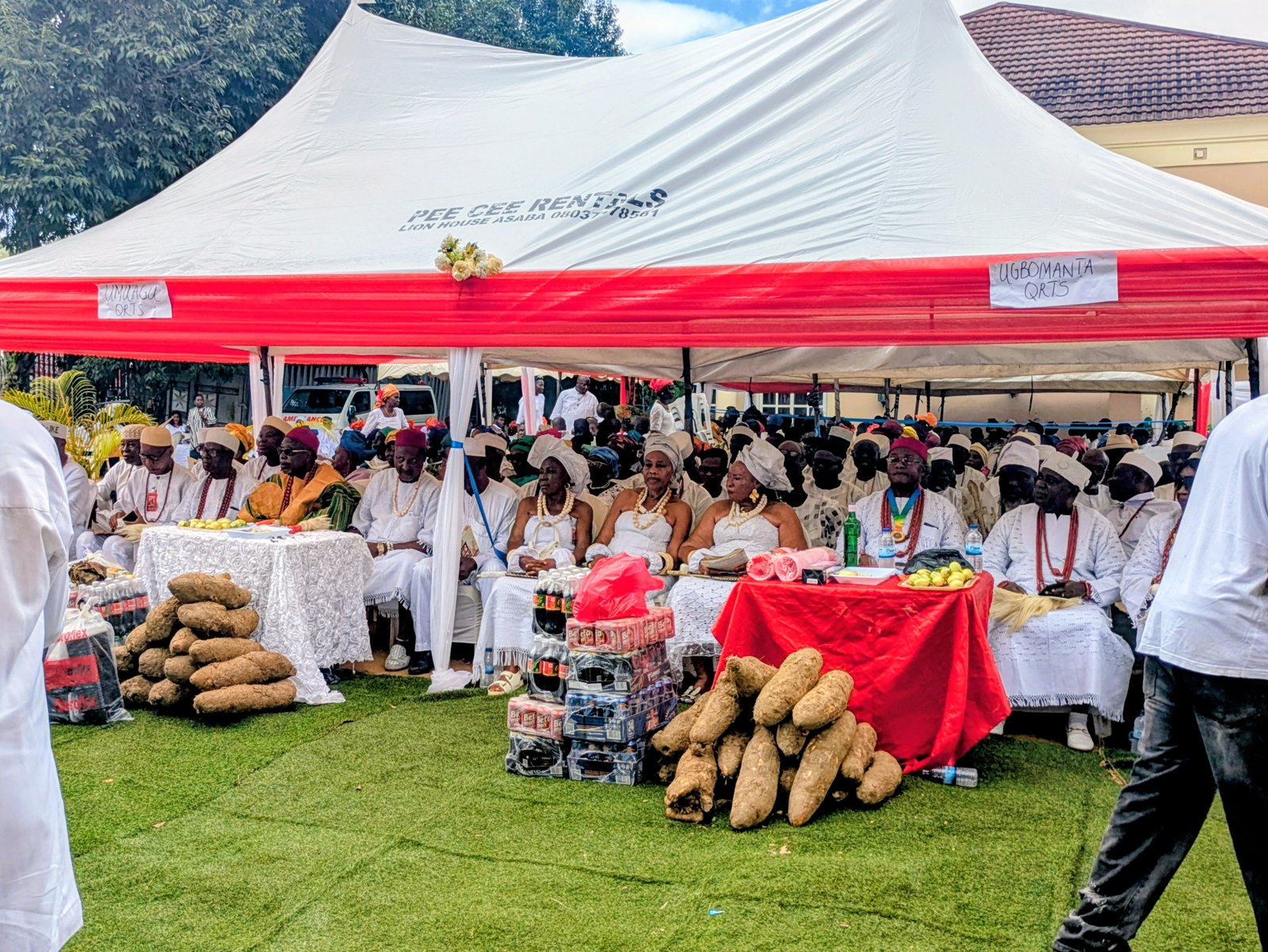


For generations, the arrival of the first new yam has meant more than food to the people of Asaba. It has marked a season of thanksgiving, family reunion and cultural renewal. On Thursday, that tradition came alive again as the Asagba of Asaba, His Royal Majesty, Prof. Epiphany Chigbogu Azinge, led the people in celebrating the 2026 Iwaji Festival.
At the Palace of the Asagba of Asaba, the new yam took centre stage as traditional rites, music and celebrations brought together residents, chiefs, traditional rulers, government officials and visitors to honour a tradition handed down through generations.
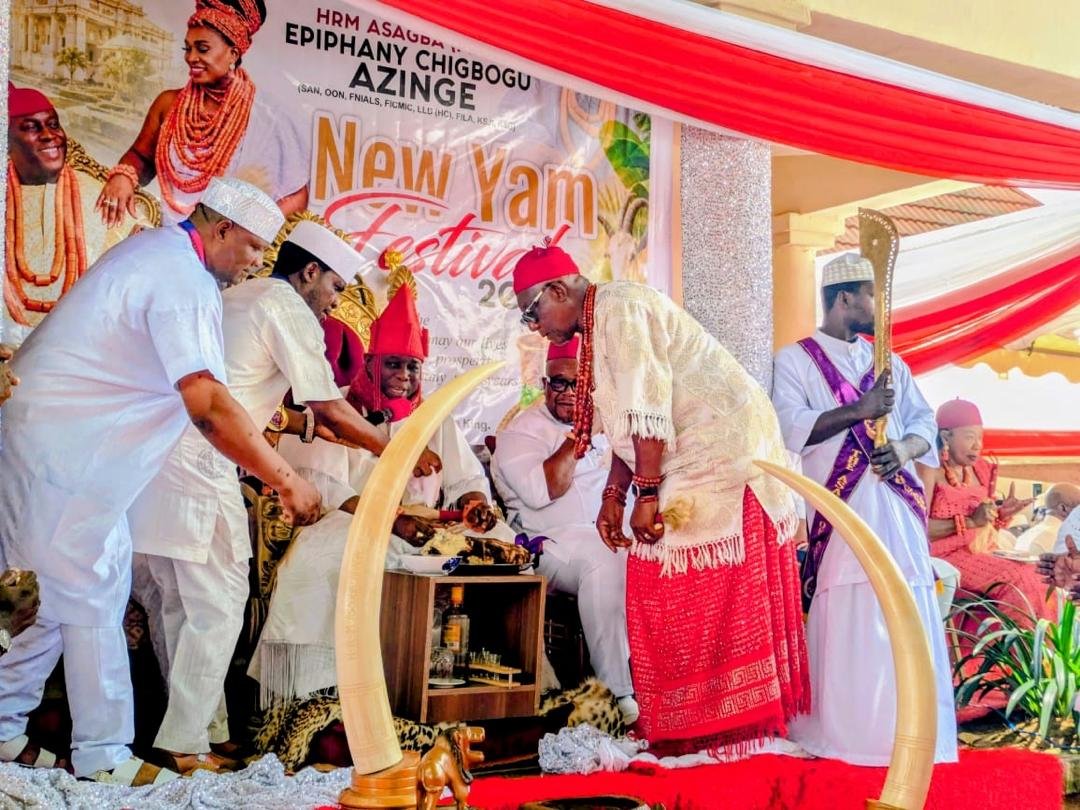
The colourful ceremony featured the symbolic slaughtering of a cow for the Asagba, the presentation of Royal Medals of Honour to notable sons and daughters of Asaba and, ultimately, the traditional cutting of the new yam by the monarch.
The event attracted the Delta State Governor, Sheriff Oborevwori, who was represented by the Chief of Staff, Prince Johnson Erijo; Deputy Governor, Sir Monday Onyeme, represented by the Deputy Chief of Staff, Sir Ifeanyi Osakwe; and Speaker of the Delta State House of Assembly, represented by Hon. Isaac Anwuzia, member representing Aniocha South Constituency in the state Assembly.
Also present were Hon. Ngozi Okolie, member representing Aniocha/Oshimili Federal Constituency in the House of Representatives; Hon. Bridget Anyafulu, member representing Oshimili South Constituency in the state Assembly; Executive Chairman of Oshimili South Local Government Area, Hon. Ezenyili Kelvin Obi; Obi of Ubulu-Unor, His Royal Majesty Obi Afamefuna Kikachukwu, PhD; Obi of Ukala Kingdom, His Royal Majesty Michael Mbanefo Ogbolu; Ugoani of Okpanam Kingdom, among other traditional rulers, chiefs, government officials, sons and daughters of Asaba and other dignitaries.
Iwaji, which literally means “the cutting of the yam”, is one of the important cultural traditions of Asaba. Beyond the ceremony itself, it represents the community’s long history of farming, communal living, thanksgiving and sharing.
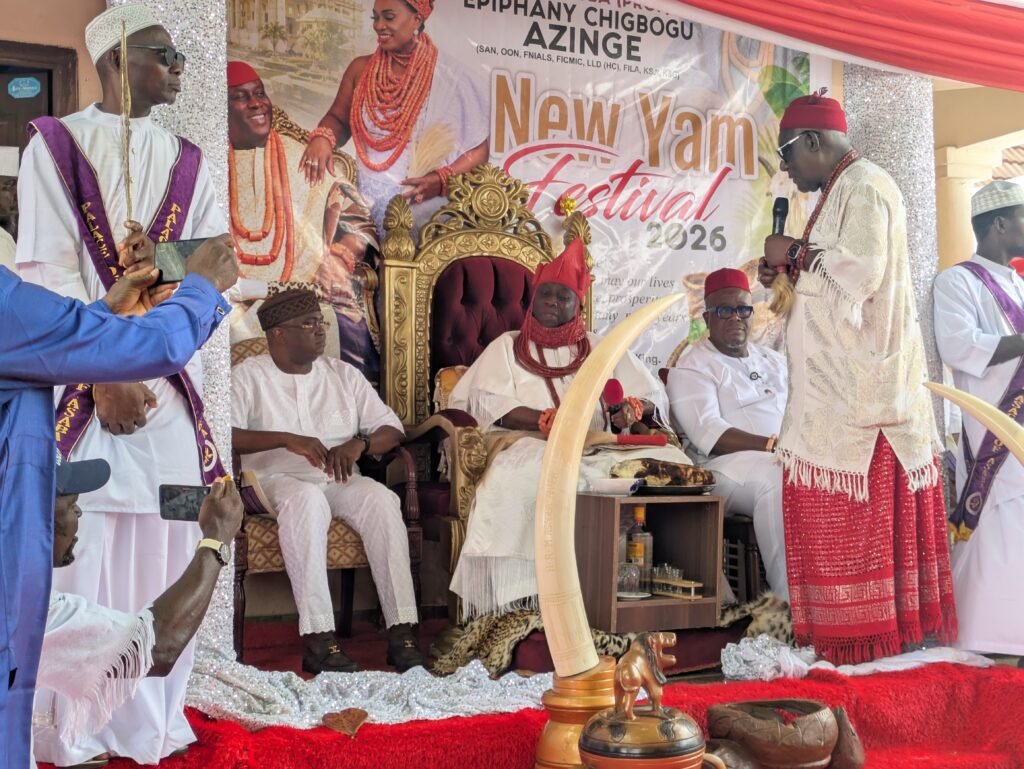
Speaking at the ceremony, Azinge said the festival was not simply about eating the new yam but also about giving thanks to God for the harvest, good health, peace and the blessings enjoyed by the people.
He said the festival also marked the beginning of a new traditional calendar for Asaba.
The monarch said the traditional institution would continue to work with the Delta State Government to promote the development of the community.
“What we do here is not in competition with government. We are only trying to complement the efforts of government,” he said.
Azinge commended the state government for its interventions in Asaba, particularly infrastructure development, and expressed the Palace’s readiness to continue supporting government initiatives.
He also called on residents and non-indigenes in Asaba to protect the peace and unity of the kingdom.
“We consider you critical stakeholders in all that we are doing,” the monarch said, urging them to remain committed to ensuring that peace continued to thrive in Asaba.
The Chairman of the 2026 Iwaji Festival Committee and Onihe of Asaba, Obi Chief Ubaka Attoh, said the turnout for the festival demonstrated the strong attachment of the people to their cultural heritage.
Attoh welcomed the dignitaries and participants and urged them to enjoy the celebration in the presence of the Asagba.
Representing the governor, the Chief of Staff, Prince Johnson Erijo, described Iwaji as more than a celebration of the new yam.
He said the festival provided an opportunity for the people to give thanks to God for life, the harvest and the strength of their community.
According to him, traditional institutions remain important partners in maintaining peace, strengthening community bonds and promoting development.
He said the state government would continue to support initiatives that preserve Delta’s cultural heritage and create opportunities for its people under the MORE Agenda.
A tradition rooted in farming
Yam has historically occupied an important place in Asaba and Anioma culture, where it was regarded as the “king of crops.”
In the past, the size of a man’s yam barn was regarded as an indication of his wealth and social standing, while farming itself was largely carried out through communal effort.
Asaba traditionally cultivated two major classes of yam — ji ani olu, grown around riverbanks and in muddy soil, and ji ani ocha, cultivated on upland farms.
The new yam was therefore regarded as more than food. Its arrival marked the end of the farming season and the beginning of a period of thanksgiving and communal celebration.
Traditionally, the Eze-Ugbo performed the first tasting of the new yam before its consumption by prominent members of the community. After confirming that the yam was safe, he announced it to the people through a celebratory procession.
The tradition has evolved over time but continues to emphasise thanksgiving, sharing, unity and pride in Asaba’s cultural heritage.
The Eze-Ugbo reportedly ate the new yam on September 15 and went around Asaba the following day to announce its suitability for consumption.
The 2026 celebration also saw the Asagba confer Royal Medals of Honour on notable sons and daughters of the kingdom for their contributions to the community.
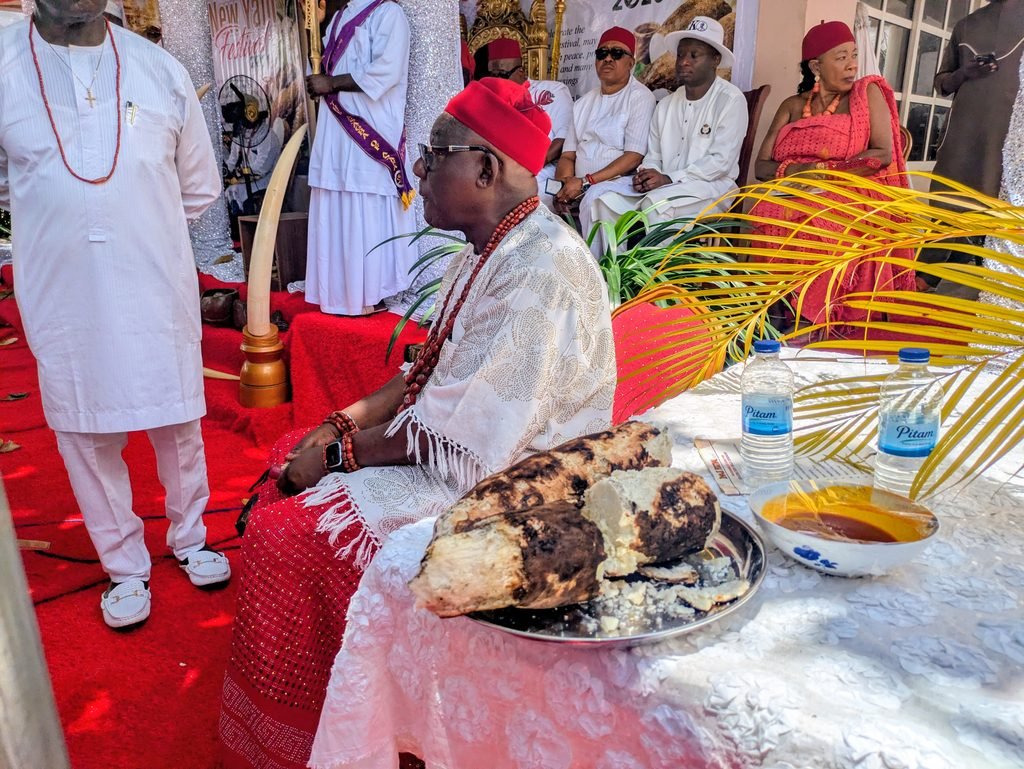
The ceremony climaxed with the traditional cutting of the new yam by the Asagba, marking the formal celebration of the year’s harvest.
The festival ended with prayers for continued peace, unity, prosperity and abundant harvests in Asaba and Delta State.