


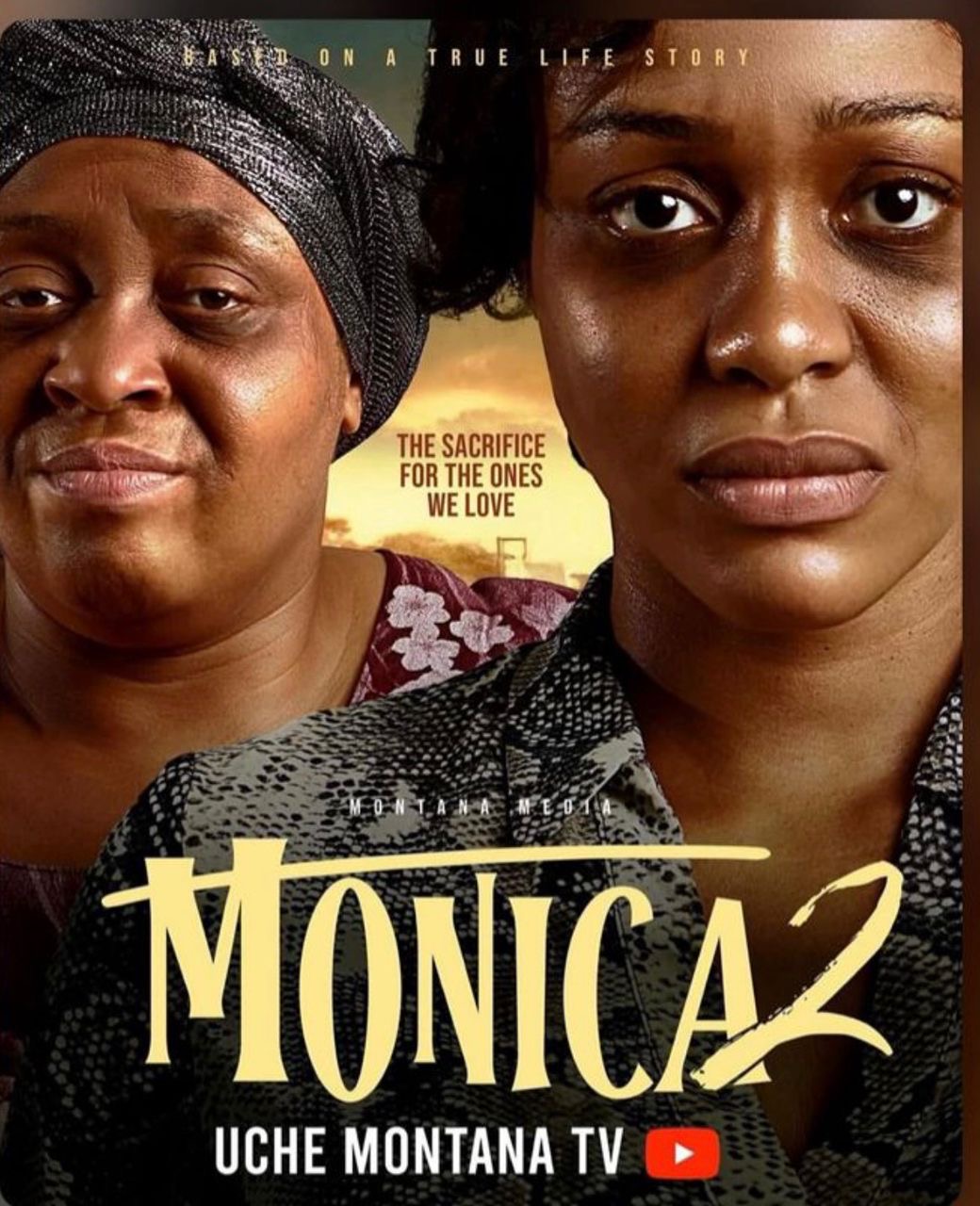
A Nollywood film, Monica Part 2, released on Saturday, May 2, 2026, has quickly risen to become the most-streamed movie in Nigeria, gaining massive attention from audiences across the country.
The film is produced by Uche Montana and directed by prolific Chidi Chijioke, under the Uche Montana Media banner. It features notable actors including Uche Montana, Blessing Onwukwe, and Joseph Momodu, among others.
Speaking in a brief interview, the director described Monica Part 2 as a film deeply rooted in real-life experiences, noting that the story reflects situations many people can relate to.
According to him, the movie is based on a true-life story. However, he explained that simply retelling real events is not enough to make a successful film. Instead, the production team carefully structured the story to make it engaging while preserving its emotional truth.
He said the aim was to present a narrative that resonates with viewers, allowing them to see aspects of their own lives reflected on screen while also learning from the story.
On the message behind the sequel, the director acknowledged the challenge of continuing a successful first installment. While Monica Part 1 focused on sacrifice, betrayal, and emotional shock, he explained that creating a sequel that meets audience expectations is often difficult in the film industry.
To address this, he said he changed the perspective of the sequel entirely. Rather than presenting it as a simple “comeback” story, he focused on deeper themes. He emphasized that Monica Part 2 explores healing, self-worth, and personal boundaries, especially after emotional breaking points.
He also introduced a unique way of viewing family—not as a place of conflict, but as a “construction site” where each member plays a role over time. According to him, the film highlights the importance of knowing when to step away and prioritize personal growth.
“The message is not about revenge or forcing forgiveness,” he explained. “It is about learning from pain, growing from it, and becoming a stronger, more self-aware person.”
The director further revealed that he approaches filmmaking from a therapeutic perspective, aiming to create stories that not only entertain but also promote emotional healing.
He noted that the story strongly connects with audiences, particularly firstborn children, because many people in African families naturally take on responsibilities from a young age.
“Whether male or female, many firstborns will see themselves in Monica,” he said, adding that the film reflects a common reality in many homes.
He shared that while working on the project, he could personally relate to the story, recalling multiple real-life situations, including experiences within his own family.
Discussing the most emotional moment during production, the director pointed to a particular scene involving a character named Sharon leaving her family. He revealed that the scene was deeply personal, as it mirrored a real incident involving a close family member.
According to him, filming that scene brought back painful memories, making it one of the most challenging moments on set. Despite this, he said the experience helped him deliver a more authentic and emotional performance behind the camera.
On why audiences should watch the film, the director described Monica Part 2 as a powerful story about self-discovery and resilience.
He said the film encourages people to stop neglecting themselves in the name of love or responsibility and instead focus on personal growth and inner strength.
The movie, he added, delivers important lessons on human development, emotional awareness, and the need to take bold steps in life.
“It shows that sometimes, the change people are waiting for begins when they decide to act,” he said.
With its strong emotional themes and relatable storyline, Monica Part 2 continues to gain traction, reinforcing its position as one of the most talked-about Nollywood films since its release.