


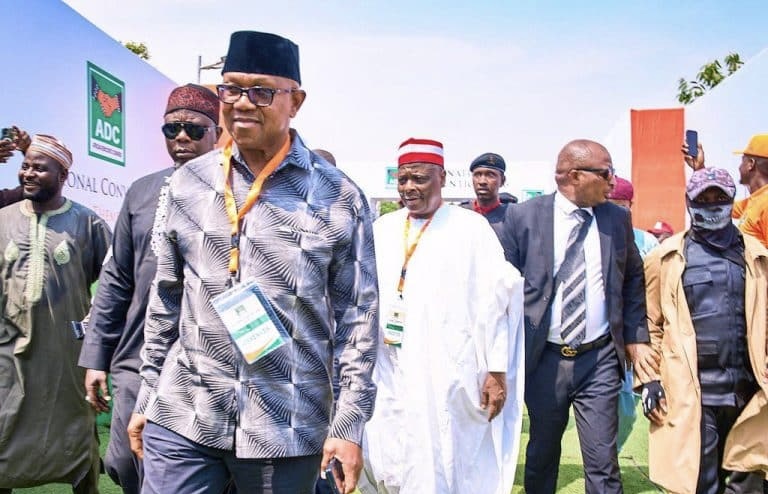
Former presidential candidate Peter Obi has expressed deep concern over what he described as a toxic political environment in Nigeria, revealing that his recent decision to leave the African Democratic Congress (ADC) was driven by growing internal crises and systemic challenges.
In a reflective message shared on Sunday morning after a church service, Obi said he felt compelled to speak out about the silent struggles faced by individuals working sincerely within the nation’s political space.
According to him, many Nigerians are unaware of the emotional and psychological burdens borne by those striving to serve with integrity in a system he described as hostile and discouraging.
“We now live in an environment that has become increasingly toxic, where the system that should protect and create opportunities often works against the people,” he stated.
Obi lamented that intimidation, insecurity, and persistent scrutiny have become the norm, adding that even within political and social circles, individuals often face unexpected criticism and lack of support from associates.
He noted that values such as humility, respect, and compassion are frequently misinterpreted as weakness, while integrity and fairness are often undervalued in the current system.
The former Anambra State governor stressed that his exit from the ADC was not due to any personal grievance against party leaders, including former Senate President David Mark or former Vice President Atiku Abubakar.
“I will continue to respect them,” he said, adding that his decision was based on broader structural issues rather than individual conflicts.
Obi, who previously contested under the Labour Party, alleged that the same systemic pressures and political interference that contributed to internal crises within his former party are beginning to manifest within the ADC.
He pointed to ongoing legal disputes, internal divisions, and what he described as a politics of control and exclusion, which he said detracts from addressing critical national challenges.
The politician also spoke about the personal toll of public service, stating that even sincere efforts are often met with suspicion and criticism, while those who step aside for peace are still subjected to attacks.
“There are moments I ask why doing the right thing is often misunderstood in our country,” he said, questioning why integrity and prudent management of resources are sometimes negatively perceived.
Obi emphasised that his political ambition is not driven by a desire for power but by a commitment to improving the lives of Nigerians.
“I am not desperate to be President or hold any office. I am desperate to see a society where people feel safe, where no mother has to mourn a child lost to insecurity, and where citizens do not go to bed hungry,” he stated.
Despite the challenges, Obi reaffirmed his belief in Nigeria’s potential, expressing hope for a future built on justice, compassion, and equal opportunities.
“A new Nigeria is possible,” he concluded.
His remarks come amid ongoing political realignments and debates over governance, leadership, and national development in the country.