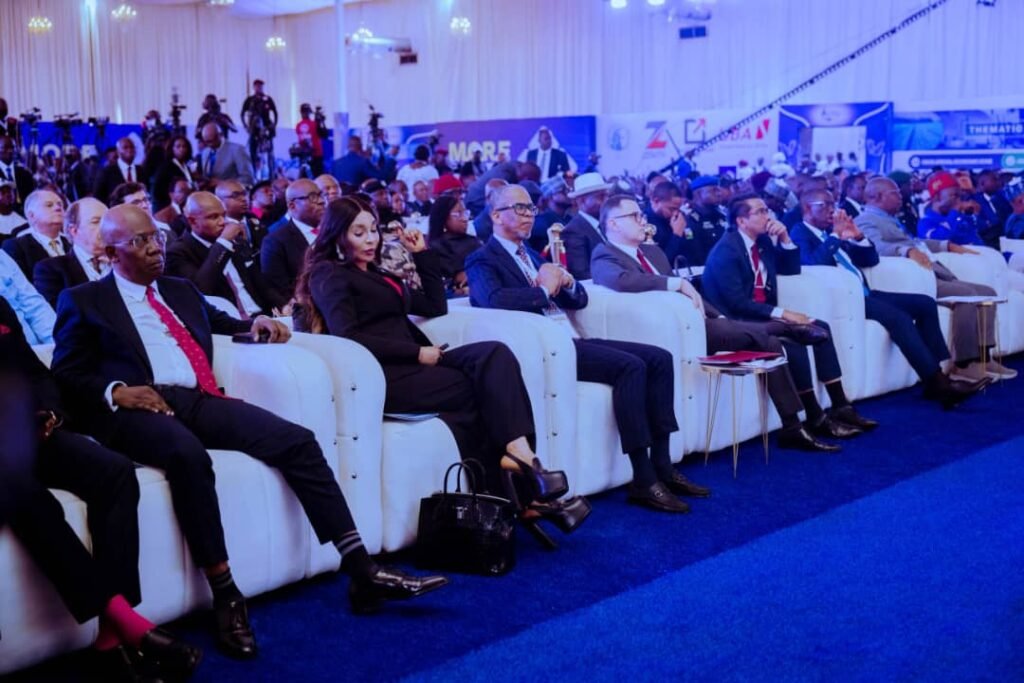


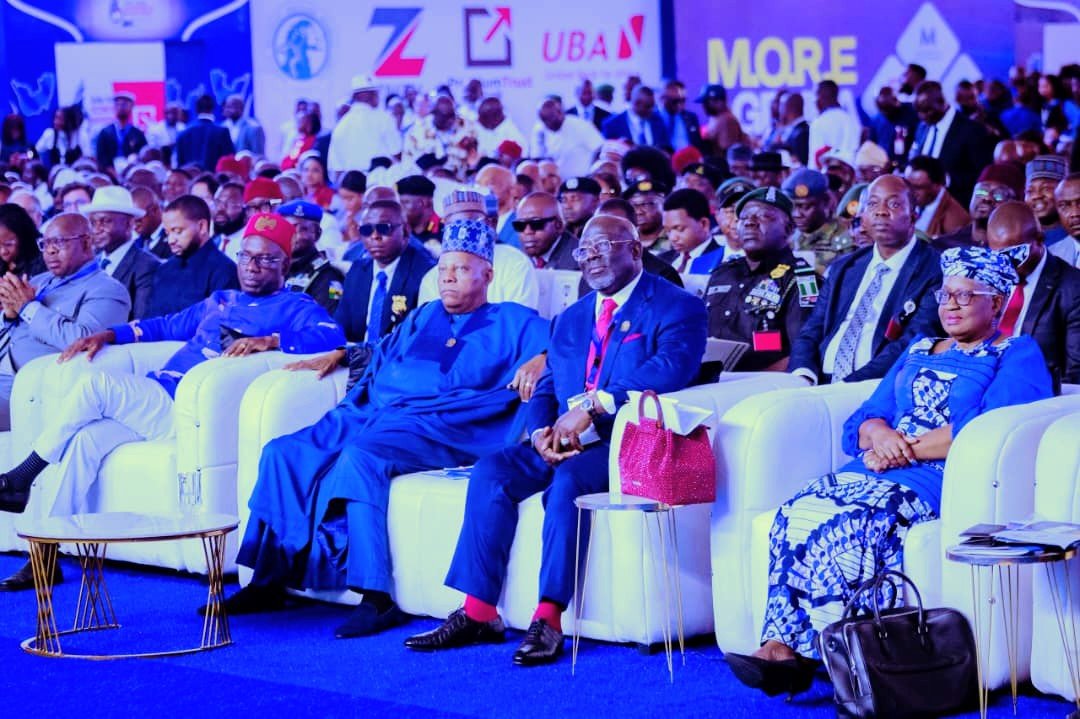
The Delta State Government has unveiled plans to diversify its economy beyond crude oil by attracting investments into agriculture, manufacturing, energy, technology, tourism and the blue economy.
The state government said it was determined to transform Delta into an investment destination capable of creating jobs, expanding businesses and improving the standard of living of residents.
Governor Sheriff Oborevwori stated this during the opening of the 2026 Delta State Economic and Investment Summit held in Asaba, with the theme, “Harnessing Our Strengths and Unlocking Our Potential for Sustainable Economic Development.”
The summit attracted Vice President Kashim Shettima, Director-General of the World Trade Organisation, Dr Ngozi Okonjo-Iweala, Anambra State Governor, Prof. Charles Soludo, renowned Pan-African scholar, Prof. Patrick Lumumba, business leaders, diplomats, investors, traditional rulers and entrepreneurs.
Oborevwori said the summit was organised to move beyond discussions and create actual investment opportunities that would stimulate economic growth.
He explained that Delta had the resources, location and human capital required to compete with other economies but needed strategic partnerships with the private sector to unlock its potential.
The governor highlighted the state’s oil and gas resources, more than 160 kilometres of coastline, fertile agricultural land, waterways and youthful population as major advantages that could drive economic transformation.
He disclosed that the state had identified over 12,000 hectares of farmland for commercial agriculture and was developing policies aimed at attracting investors into agro-processing, manufacturing, energy and technology.
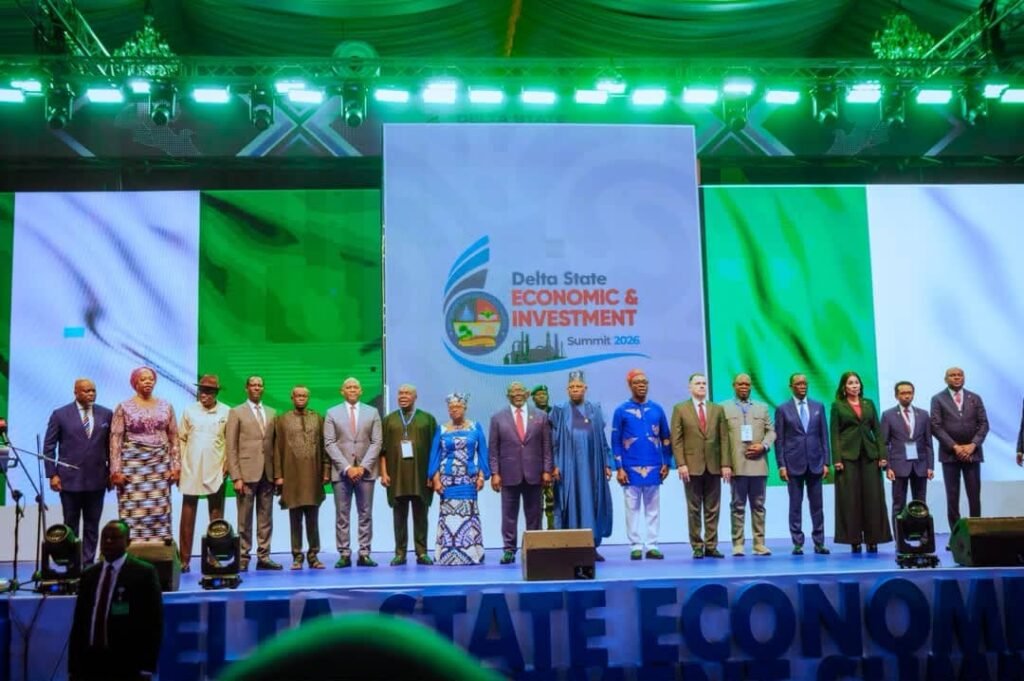
Oborevwori also announced the establishment of a $100m Viability Guarantee Fund aimed at reducing investment risks and encouraging businesses to establish operations in the state.
He said the government would continue to provide an enabling environment through infrastructure development, improved security, tax incentives and investor-friendly policies.
“We are not just inviting investors to Delta; we are building a system where investments can thrive and create lasting value,” the governor said.
Nigeria’s economy stabilising — Shettima
Vice President Kashim Shettima, who was the Guest of Honour at the summit, said Nigeria’s economic reforms were gradually restoring confidence among investors.
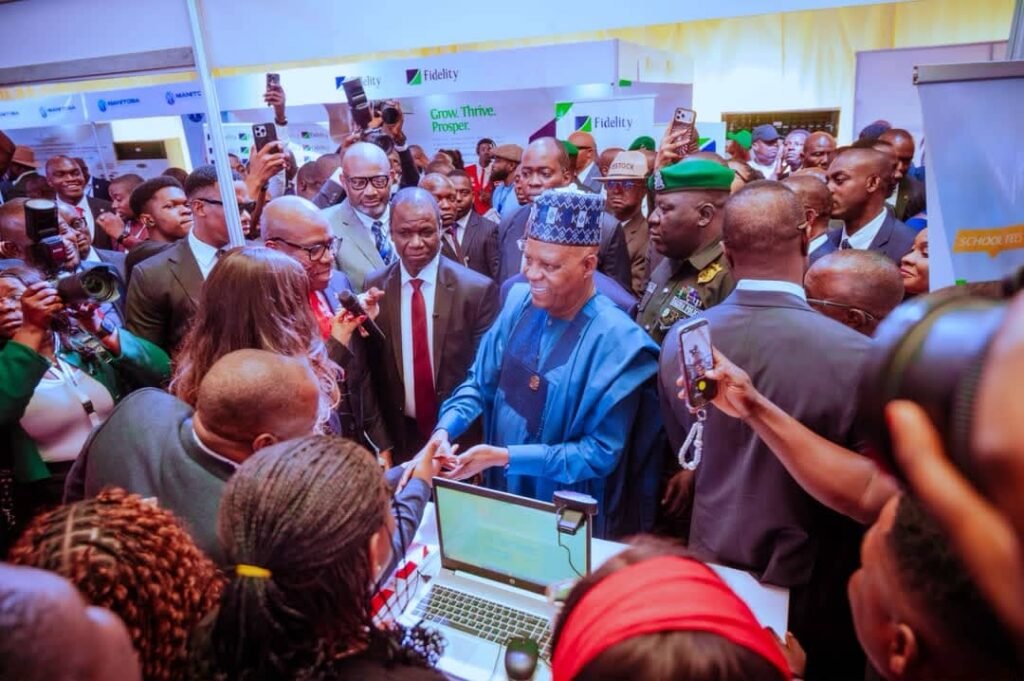
Shettima said the Federal Government had taken steps to stabilise the economy through foreign exchange reforms, improved monetary discipline and policies aimed at attracting investment.
He noted that Nigeria’s foreign reserves had improved significantly, adding that the country was regaining credibility in the international investment community.
According to him, the competition among states to attract investments was a positive development because it would encourage innovation, job creation and economic growth.
“The best time to invest is before the opportunity becomes expensive,” Shettima told investors.
He urged businesses, entrepreneurs and development partners to take advantage of the opportunities available in Delta State.
The Vice President said Delta’s economic strength extended beyond oil, pointing to its agricultural potential, gas resources, coastline, mineral deposits and educated population.
He, however, warned that natural resources alone could not create prosperity without proper planning, infrastructure and investment.
Okonjo-Iweala urges Delta to focus on key sectors
The Director-General of the World Trade Organisation, Dr Ngozi Okonjo-Iweala, urged Delta State to identify specific sectors where it had competitive advantages and focus resources on developing them.
She said global economic changes, including supply chain diversification and the growth of the African Continental Free Trade Area, had created opportunities for states like Delta to attract investors.
Okonjo-Iweala identified special economic zones, agriculture, marine services, gas-based industries, digital infrastructure and manufacturing as areas capable of transforming the state’s economy.
She advised the government to avoid spreading resources across too many sectors.
“You have to identify two or three areas where you have a strong comparative advantage and take them along the entire value chain,” she said.
The WTO boss also encouraged Delta to develop its blue economy by investing in fisheries, marine logistics, ports and related industries.
She said Nigeria spends billions of dollars importing fish products annually and Delta could position itself to capture part of that market.
Okonjo-Iweala also stressed the importance of investing in young people, describing human capital development as one of Delta’s greatest assets.
Avuru, Elumelu highlight energy and infrastructure
Chairman of the summit, Engr. Austin Avuru, said Delta must use its oil wealth to build other sectors of the economy.
Avuru said successful oil-producing countries such as Norway had invested their resources wisely by creating sovereign wealth and developing other industries.
He called for improved infrastructure, agricultural investment and stronger industrial development.
He also identified waterways, ports, industrial parks and commercial agriculture as areas that could accelerate Delta’s economic growth.
Businessman Tony Elumelu said reliable electricity remained critical to industrial development.
Elumelu, who commended the state government’s investment drive, said no economy could industrialise without stable and affordable power.
He disclosed that his company had the capacity to contribute to Delta’s energy development and appealed for collaboration to improve electricity generation and distribution in the state.
Investors unveil projects
Managing Director of Mosra Energy Limited, Olukayode Ramos, announced plans to develop a 600-megawatt power plant in Delta State using the state’s coal resources.
Ramos said Delta had one of the largest coal reserves in Nigeria and that the project could support industries and manufacturing activities.
He said the company had already exceeded 200 million tonnes of coal reserves in Delta and was committed to investing in the state.
Similarly, Managing Director of Niger City Development Company Limited, Ikechukwu Omeze, announced plans to transform the Asaba waterfront into a modern economic district.
Omeze said the Niger City project would provide opportunities in housing, tourism, logistics, hospitality and commercial activities.
He said the company had invested heavily in land reclamation and equipment to demonstrate confidence in Delta’s economic future.
Africa must invest in itself — Lumumba
Prof. Patrick Lumumba challenged African countries to reduce dependence on external investors and strengthen local investment capacity.
Lumumba said Africa’s large population would only become an advantage if governments created industries, jobs and opportunities.
He urged Delta State to encourage African investors and entrepreneurs, noting that economic transformation should not depend only on foreign capital.
He also called for greater regional integration to make it easier for Africans to move, trade and invest across the continent.
Brazil offers agricultural partnership
The Brazilian Ambassador to Nigeria, Carlos José Areias Moreno Garcete, said Brazil was willing to strengthen economic cooperation with Nigeria, particularly in agriculture.
He said both countries had recorded growth in bilateral trade and were exploring opportunities in farming technology, food security and industrial development.
The ambassador said Brazil’s experience in agricultural transformation could support Nigeria’s efforts to improve food production.
NACCIMA advocates local enterprise development
The Chairman of the Nigerian Association of Chambers of Commerce, Industry, Mines and Agriculture, Engr. Jani Ibrahim, urged Delta State to adopt the “one village, one enterprise” model to promote grassroots economic development.
He said the initiative would create jobs, strengthen rural economies and encourage local production.
Ibrahim also urged stronger collaboration between government and the private sector to support business growth.
He challenged Delta to compete not only within Nigeria but with leading economies across Africa and the world.
Soludo calls for cooperation among states
Anambra State Governor, Prof. Charles Soludo, urged states to work together to drive economic growth.
Soludo said neighbouring states such as Delta and Anambra should deepen economic cooperation because they shared common opportunities in trade, industry and infrastructure.
He praised the Federal Government’s economic reforms, saying improved macroeconomic stability would create better opportunities for states and investors.
He also advised governments to invest a continuous process rather than an occasional event.
At the end of the summit, stakeholders agreed that the success of Delta’s investment drive would depend on implementation.
Speakers stressed that attracting investors was only the first step, while creating industries, jobs and sustainable businesses would determine whether the state’s economic vision becomes reality.
The summit ended with a renewed call for partnerships between government, investors, entrepreneurs and development organisations to build a diversified Delta economy beyond oil.