


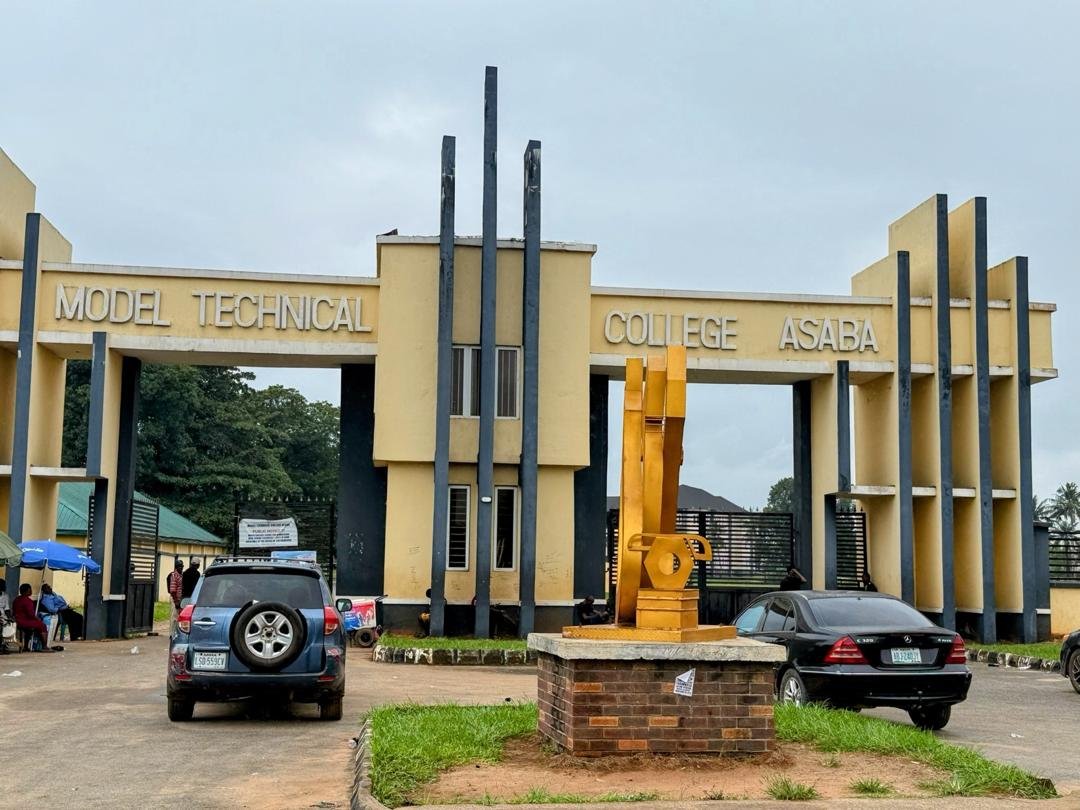
More than 500 students on Saturday sat for the entrance examination into technical colleges in Delta State, with parents and education officials expressing optimism that technical education would equip young people with practical skills for self-reliance.
The examination, held at the Model Technical College, Asaba, was part of the admission process for prospective students seeking to begin their technical education.
The Permanent Secretary, Delta State Ministry of Technical Education, Dr Anthony Okwunze, who monitored the exercise, said the examination was designed to ensure that students admitted into the technical colleges had the required aptitude and interest.
Okwunze said the students were writing their first paper, English Language, before proceeding to the second paper.
He said more than 500 students were participating in the examination across the state, adding that the exercise was also being conducted at the other technical colleges in Delta.
According to him, the growing interest in technical education was encouraging, particularly as parents were beginning to appreciate the importance of giving their children practical skills.
“I met a woman who came all the way from Warri simply because she wanted her child to acquire practical skills. This is very encouraging because we are now focusing more on practical education,” he said.
Okwunze explained that the objective was to ensure that students did not leave secondary school without a skill that could help them become economically productive.
He said, “When these children complete their education up to Senior Technical 3, (ST3), they should leave with a particular skill that they can use to become productive. While waiting for admission into higher institutions, they can use the skills they have acquired to support themselves and, by extension, their families.”
The Permanent Secretary commended the Delta State Governor, Sheriff Oborevwori, for his support for technical education and skills acquisition in the state.
He said the government’s investment in technical education would help young people acquire skills needed to compete in an increasingly technology-driven world.
He added that the ministry might consider a supplementary examination for prospective students who were unable to participate in the exercise, depending on the number of interested applicants.
A teacher at the Model Technical College, Asaba, James Mele, said the examination was necessary to ensure that students with the right aptitude were admitted into the technical school.
Mele said the exercise had been conducted in a calm and organised environment, adding that the students were cooperating with the officials.
“So far, the examination has been very successful. As you can see, the environment is calm and conducive, and the students are doing exactly what they are expected to do,” he said.
One of the candidates, Bright Chukwuka, said the examination was not too difficult, adding that he was comfortable with the environment.
He expressed optimism that he performed well and would gain admission into the school.
For some parents, the decision to send their children to the technical college was driven by the desire to combine academic education with practical skills and discipline.
One of the parents, Tony Okwechime, said he chose the school for his son because the boy was technically inclined and he had heard positive reports about the standard of the institution.
Okwechime said his confidence in the school increased after he personally visited the institution to obtain the examination form.
He said he observed how teachers handled students who arrived late to school, describing the system as disciplined and organised.
According to him, some latecomers were made to clean parts of the school environment before returning to their classrooms, which he said demonstrated that the school placed emphasis on discipline.
“For me, that demonstrated a good level of discipline and organisation. The system here appears to be intact, and discipline is very important in the upbringing of our children,” he said.
Okwechime also commended the security arrangements at the school, saying the controlled movement of people in and out of the premises gave parents confidence that their children were safe.
He, however, appealed to the government to establish more schools where technical skills, discipline and quality education could be combined.
Another parent, Mrs Collins Recheal, said she was satisfied with the conduct of the examination and believed the process would help the school select students capable of performing well academically.
Recheal said her son was interested in the school, which influenced her decision to bring him for the entrance examination.
She encouraged other parents to consider technical education for their children, describing the school as a good environment for learning and development.
She, however, appealed to the government to improve some of the facilities in the school, particularly electricity and other basic infrastructure.
According to her, she noticed that electricity was not available during her visit and was told by her son that some facilities had also been damaged.
She urged the government to pay more attention to the maintenance and provision of facilities needed to create a more conducive learning environment.
The comments from the parents, students and education officials underscore the growing emphasis on technical and vocational education as an avenue for equipping young Nigerians with practical skills while preparing them for further education and employment.