


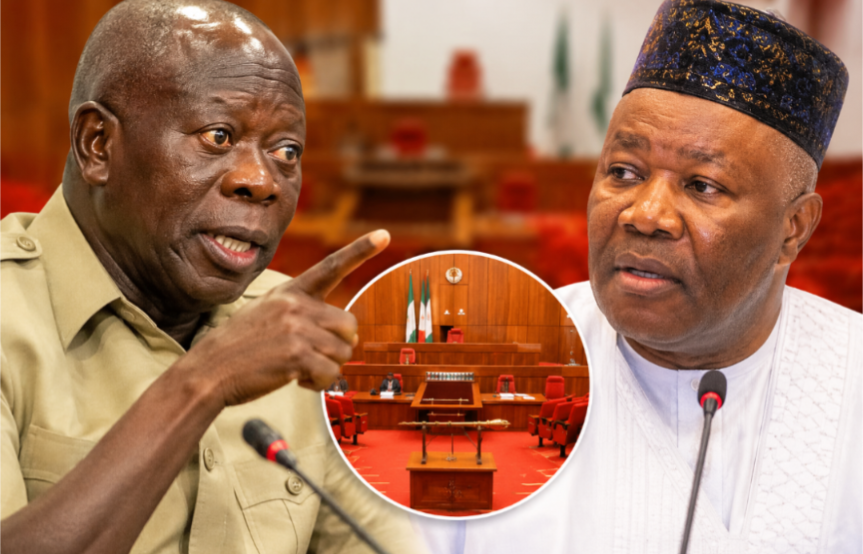
Fresh controversy has erupted in the Nigerian Senate following calls by Adams Oshiomhole for Senate President Godswill Akpabio to step down over recently amended Senate rules governing the emergence of principal officers in the Red Chamber.
Oshiomhole, who represents Edo North Senatorial District, made the remarks while addressing journalists in Abuja on Thursday, arguing that the newly introduced requirements had created what he described as a “moral crisis” within the Senate leadership.
The former governor of Edo State criticised the amendment to the Senate Standing Orders, saying the revised rules could unfairly prevent some lawmakers from contesting leadership positions despite previous precedents within the National Assembly.
According to him, the amendment requiring senators to complete at least two uninterrupted terms before contesting for positions such as Senate President raises serious concerns about fairness, transparency, and equal opportunity among lawmakers.
Oshiomhole argued that if the new rules are to be strictly enforced, Akpabio himself may not qualify to remain Senate President because he has not completed the number of years now being proposed under the amended guidelines.
He explained that even when Akpabio’s previous and current tenures in the Senate are combined, the Senate President still falls short of the eight-year requirement implied by the amendment.
The senator maintained that it would be unjust for political leaders who previously benefited from less restrictive rules to introduce later conditions that could stop others from aspiring to similar positions.
He warned against changing the rules of the game after already benefiting from the old system, insisting that such actions undermine trust and democratic principles within the legislature.
“This rule has created a serious moral issue,” Oshiomhole said. “The Senate President became minority leader during his first term, and today he is presiding over an amendment that may stop senators with one term from contesting leadership positions.”
He added that if the Senate eventually adopts a strict rule requiring eight consecutive years in office before anyone can become Senate President, Akpabio should “lead by example” by vacating the position.
Oshiomhole also referenced former Senate President David Mark, noting that Mark spent eight years leading the Senate under earlier and more flexible rules without imposing additional restrictions on aspiring lawmakers.
He questioned the rationale behind introducing tougher eligibility requirements that could significantly reduce the number of senators qualified to seek principal offices in the current National Assembly.
The dispute comes amid growing tension in the Senate following the approval of amendments to the Standing Orders earlier this week.
Under the revised rules, only senators who have completed at least two uninterrupted terms would be eligible to contest for top leadership positions, including Senate President and other principal offices in the 11th National Assembly.
The amendment has continued to generate debate among lawmakers and political observers, with critics arguing that the changes could limit internal democracy within the Senate, while supporters insist the rules are necessary to ensure experienced leadership in the chamber.