


The Economic Community of West African States has restated its commitment to introducing the ECO, its proposed single regional currency, in 2027 as part of efforts to strengthen trade, economic integration and growth across member states.
The decision was reached at the 69th Ordinary Session of the ECOWAS Authority of Heads of State and Government held in Lungi, Sierra Leone, where regional leaders reviewed the bloc’s economic outlook and agreed to push ahead with the long-delayed currency project.
The leaders said the ECO would initially be adopted by member states that meet the required economic conditions, while countries that do not qualify immediately would receive support to enable them join the regional currency at a later date.
The resolutions were contained in the final communiqué issued on Tuesday after the summit, which was chaired by Sierra Leonean President Julius Maada Bio.
According to the communiqué, ECOWAS economies remained resilient despite global economic challenges and are expected to perform better in 2026, supported by easing inflation, lower public debt-to-GDP ratios and improved current account balances, although fiscal deficits remain a concern.
The Authority also welcomed the registration of the name “ECO” with the African Intellectual Property Organisation and directed the ECOWAS Commission to secure trademark registration with other regional and international intellectual property bodies.
On security, ECOWAS expressed concern over worsening terrorism in the Sahel and Lake Chad Basin, endorsed a revised roadmap for the activation of the ECOWAS Counterterrorism Brigade and projected that the force would become fully operational by July 2027.
The leaders urged member states to pay outstanding Community Levy arrears needed to finance the regional counterterrorism force.
They also condemned the rising cases of banditry, kidnappings and abductions of schoolchildren, particularly in Northern Nigeria, while expressing solidarity with Nigeria and commending President Bola Tinubu for efforts to rescue victims and tackle insecurity.
The Authority further expressed concern over worsening humanitarian conditions caused by conflicts, terrorism, displacement, climate-related disasters and food insecurity, directing the ECOWAS Commission to strengthen humanitarian interventions and support the voluntary return of migrants from North Africa.
On relations with Burkina Faso, Mali and Niger, ECOWAS extended the mandate of its Chief Negotiator, Dr. Lansana Kouyaté, until December 2026 and maintained that negotiations with the three countries would continue as a single bloc.
The summit also raised concerns over food insecurity and rising fertiliser prices, calling for faster implementation of the ECOWAS Rice Agenda and Regional Rice Roadmap to reduce dependence on imported rice and improve food security.
The leaders reaffirmed their commitment to the ECOWAS Protocol on Free Movement of Persons, Right of Residence and Establishment, stressing the need to promote cross-border trade and regional economic cooperation.
ECOWAS also condemned xenophobic attacks against Africans, particularly West Africans, in South Africa and urged the South African authorities to take stronger measures to protect foreign nationals.
On trade, the Authority warned that bilateral agreements entered into by individual member states could weaken the ECOWAS Customs Union and directed the Commission to coordinate common regional positions during international negotiations.
The leaders also approved the development of investment-ready infrastructure projects in transport, energy, digital connectivity and water to attract funding from development partners and private investors.
They welcomed the signing of the Inter-Governmental Agreement on the African Atlantic Gas Pipeline, describing it as a strategic project that would improve energy security, industrialisation and regional integration.
The summit further endorsed regional digital reforms, including new rules on data protection, cybersecurity, digital governance and electronic communications, as well as the establishment of a Regional Cybersecurity Coordination Mechanism.
ECOWAS also adopted a declaration promoting greater participation of women in politics and public decision-making across member states.
On governance, the Authority urged Guinea-Bissau’s transitional authorities to ensure credible elections, respect human rights and work towards restoring constitutional order, while appointing Senegal to facilitate dialogue in the country.
The leaders commended the peaceful conduct of recent elections in Benin, Guinea, Cabo Verde and Côte d’Ivoire and pledged continued support for countries preparing for elections later this year and in early 2027.
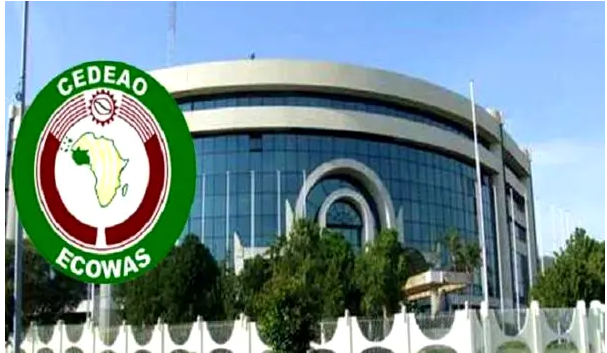
They also thanked development partners for supporting regional integration and praised China for constructing and donating the new ECOWAS headquarters in Abuja.
The summit approved appointments into key ECOWAS institutions, granted Nigeria two additional weeks to resolve issues concerning the Vice-President position allocated to the country, appointed General Birame Diop of Senegal as President of the ECOWAS Commission for the 2026–2030 term, and elected Senegalese President Bassirou Diomaye Faye as Chairman of the ECOWAS Authority of Heads of State and Government for a one-year term.