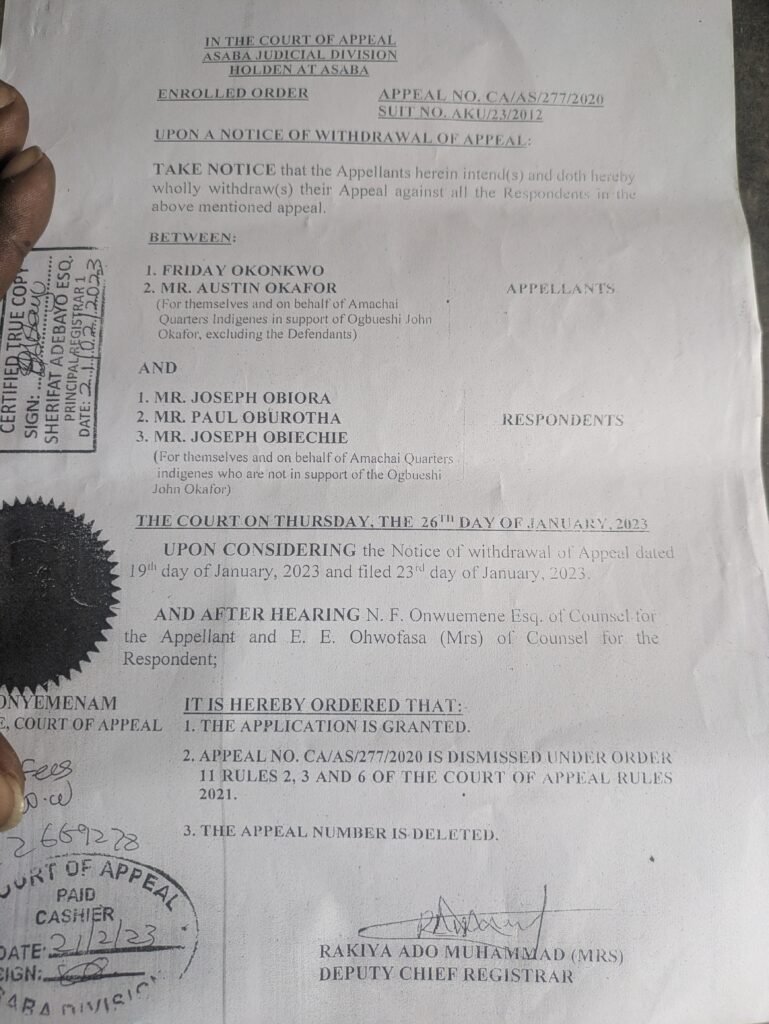


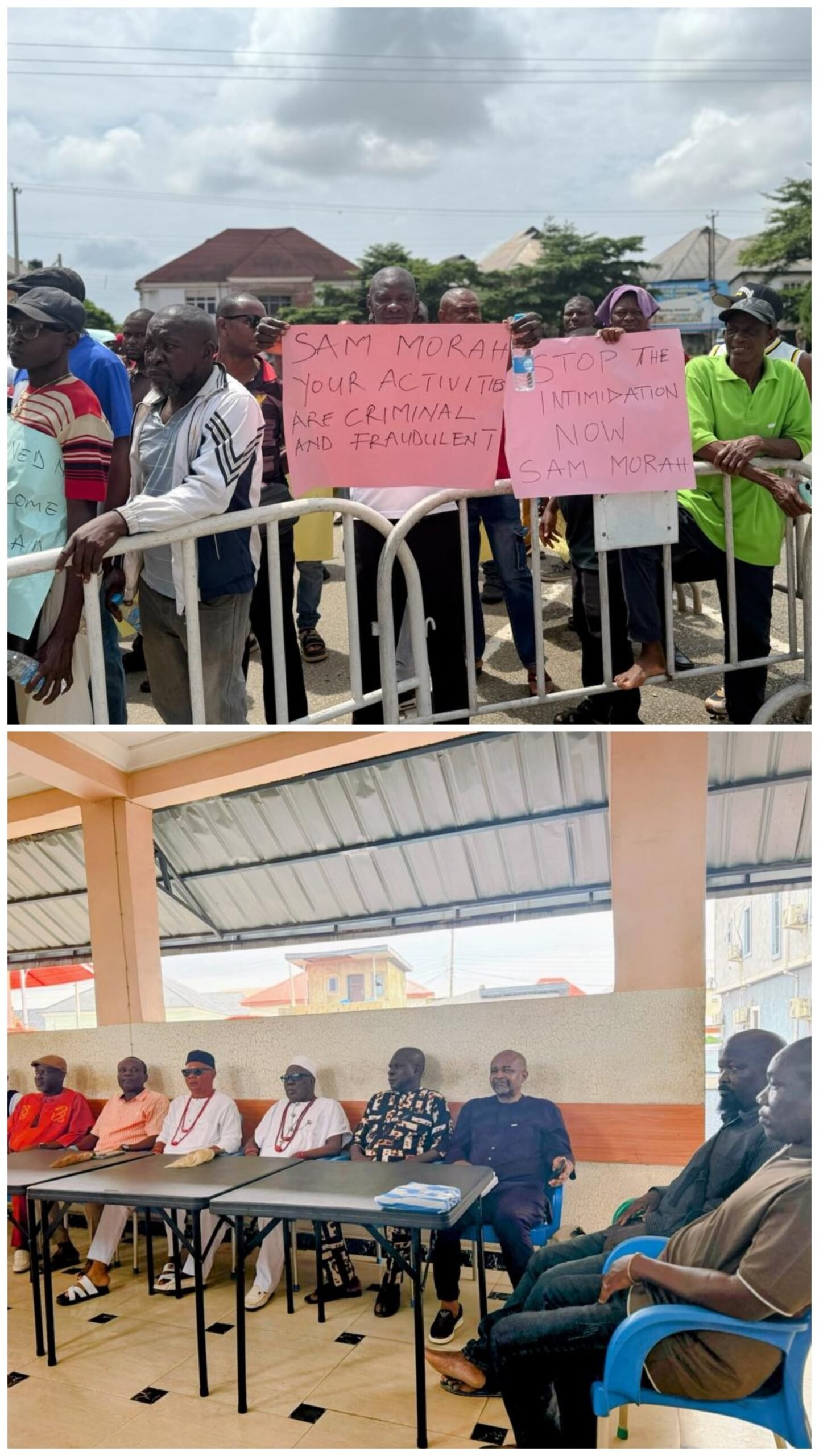
The lingering land dispute in Amachai community, Okpanam, Oshimili North Local Government Area of Delta State, has taken a new turn, with members of Group B and Maltek Resources Nigeria Limited rejecting allegations that they are attempting to take over the community’s land illegally.
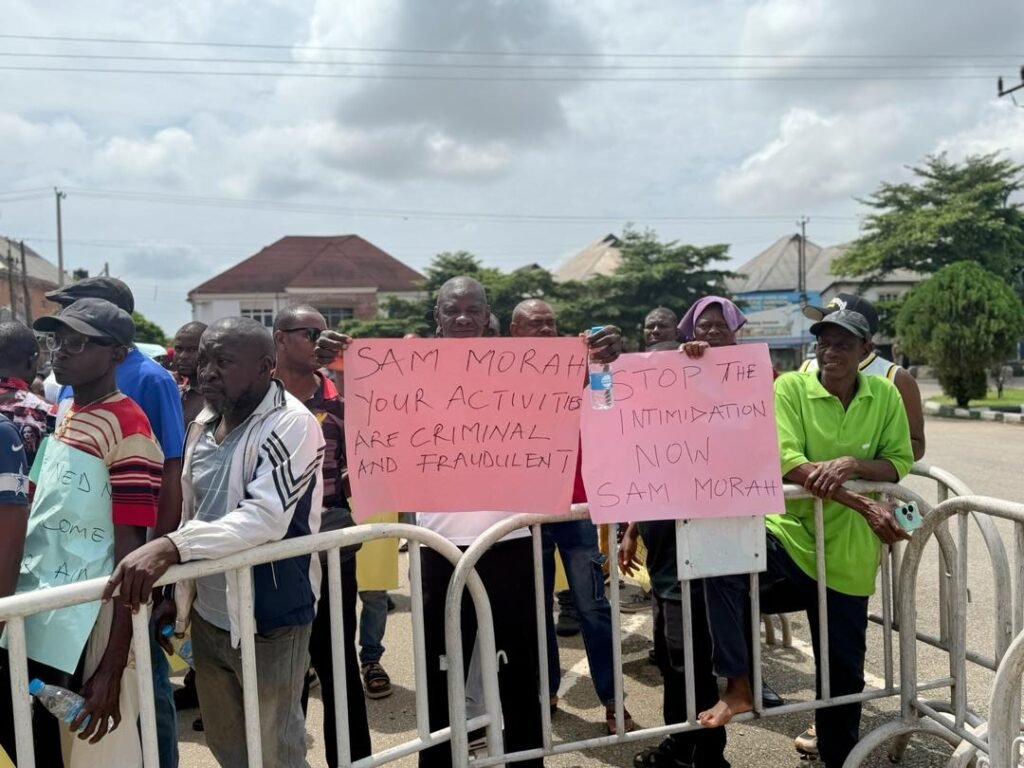
The disagreement followed a protest by members of Amachai Group A at the Delta State Government House, Asaba, on Friday, July 31, 2026.
The protesters carried placards with inscriptions including, “Sam Morah, your activities are criminal and fraudulent” and “Stop the intimidation now.”
In a statement presented during the protest by Diokpa Raymond Egwuogu, described as the second-in-command of Amachai, Diokpa Umuolie, described as the third-in-command, and Diokpa Michael Ndih, Group A accused Engr. Samuel Morah and Maltek Resources of attempting to take over its ancestral land.
The group said the dispute started from a communal crisis that eventually led to a court case, Suit No. AKU/39/2012.
According to the protesters, the High Court delivered judgment in 2020 and recognised the incumbent Diokpa Isi as the custodian of Amachai communal land.
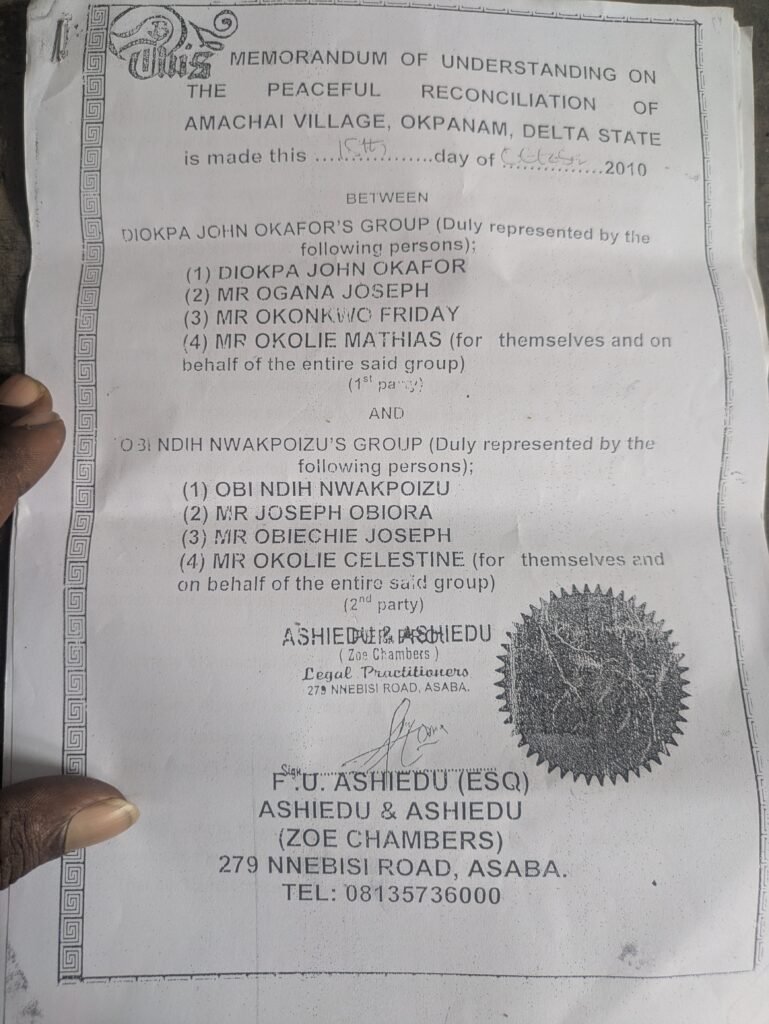
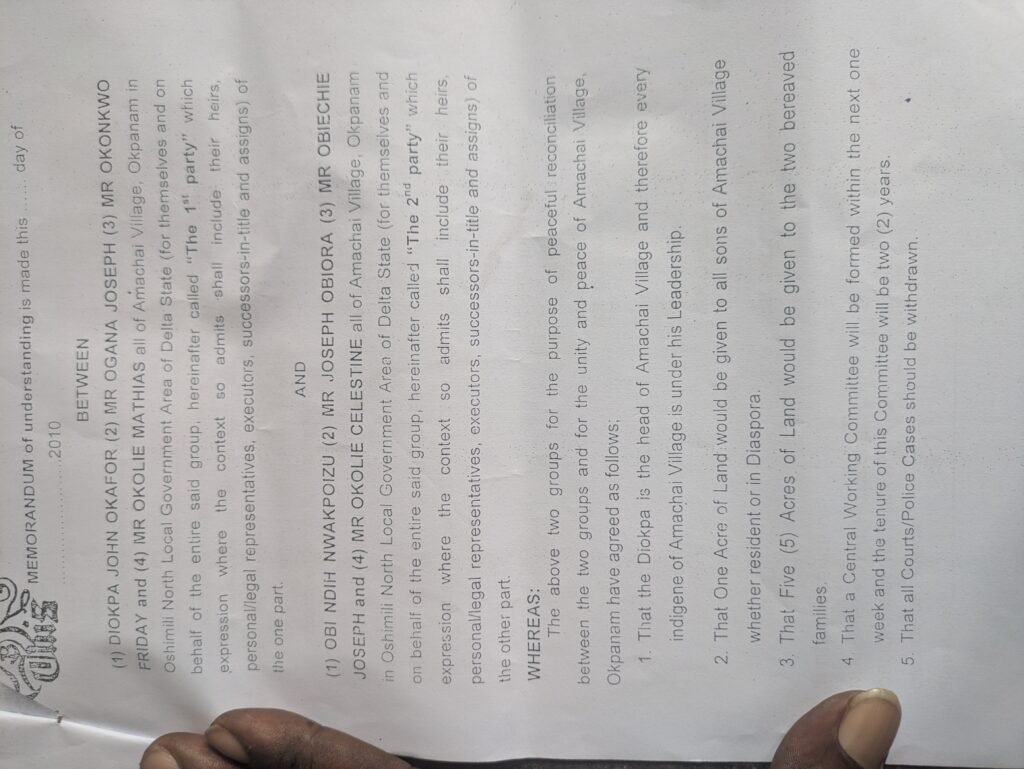
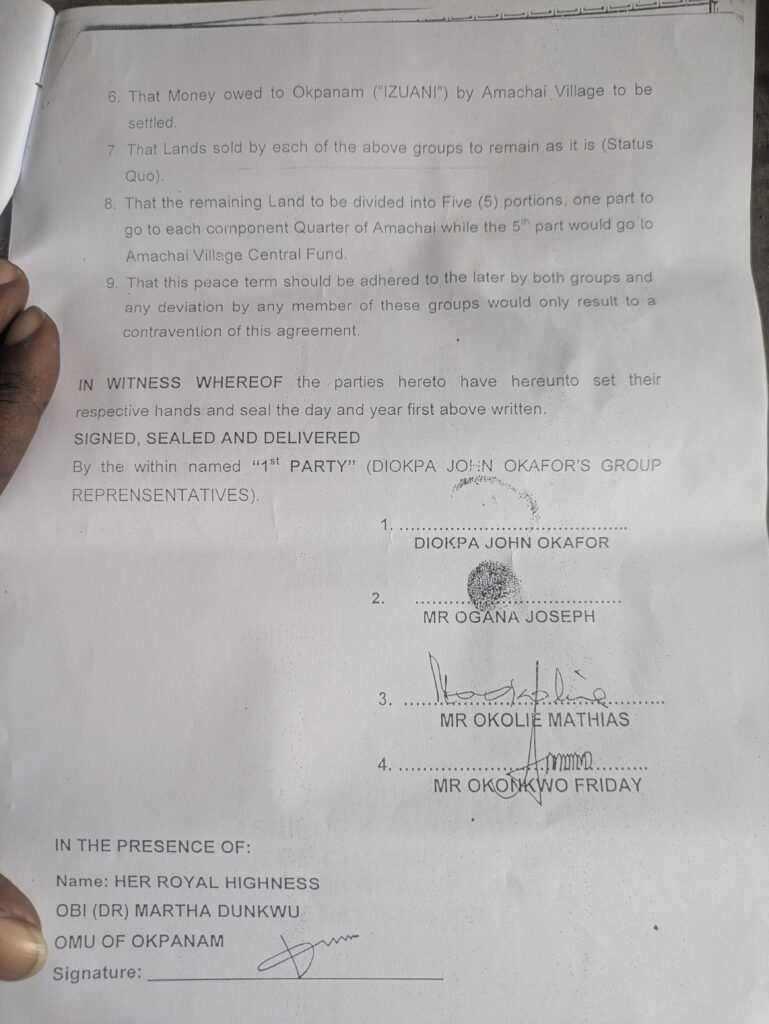
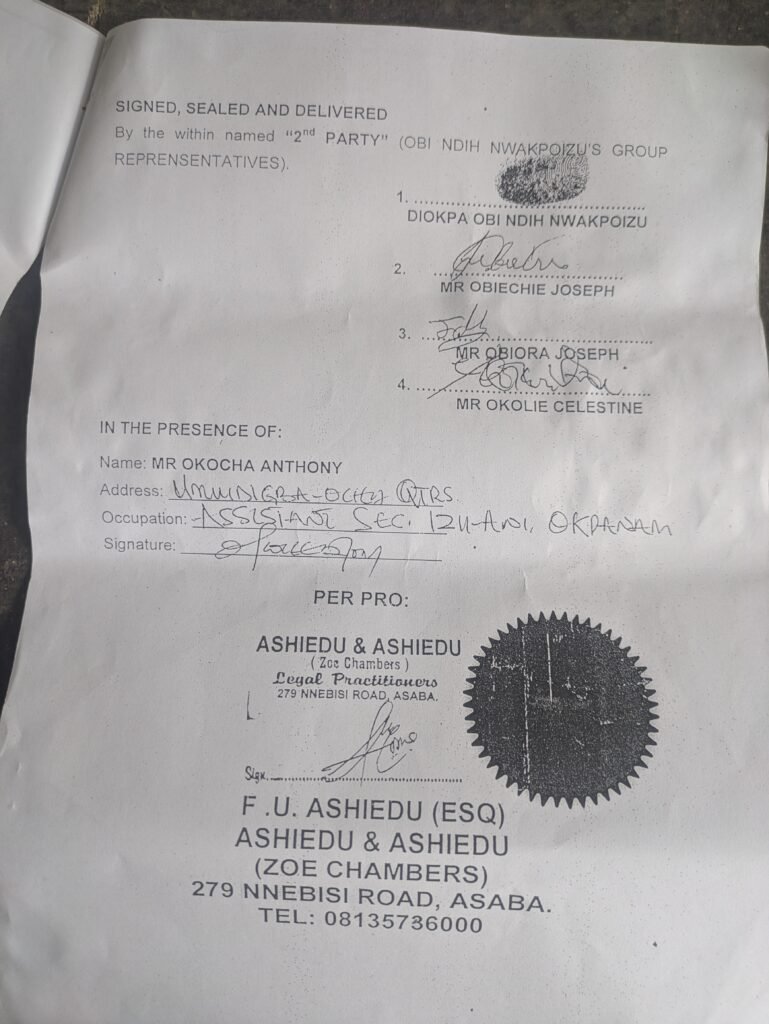
They said the court also adopted a Memorandum of Understanding reached by the two factions during efforts to resolve the crisis.
Group A maintained that the judgment did not transfer ownership of any portion of Amachai land to an individual.
The protesters further alleged that Morah later approached the community claiming to be recovering land for its people, but that the community rejected the proposal because, according to them, no land had been lost.
They alleged that Maltek subsequently claimed to have acquired about 1,800 acres of land from the community and that Morah was given a Power of Attorney to represent the company.
Group A also questioned the writ and warrant of possession allegedly obtained in 2024, arguing that Maltek and some other persons were not parties to the original suit.
The protesters alleged that armed policemen were brought to the community to enforce the writ.
They further alleged that on May 4, 2026, more than 20 trucks of policemen, accompanied by bulldozers and caterpillars, entered the disputed property and destroyed some structures belonging to members of the community.
Group A also alleged that some of its representatives were arrested during protests against the alleged takeover.
The protesters said an order made by the court in November 2025 remained valid and had not been vacated or set aside.
They subsequently warned members of the public, investors and prospective land buyers to be cautious about transactions involving the disputed property.
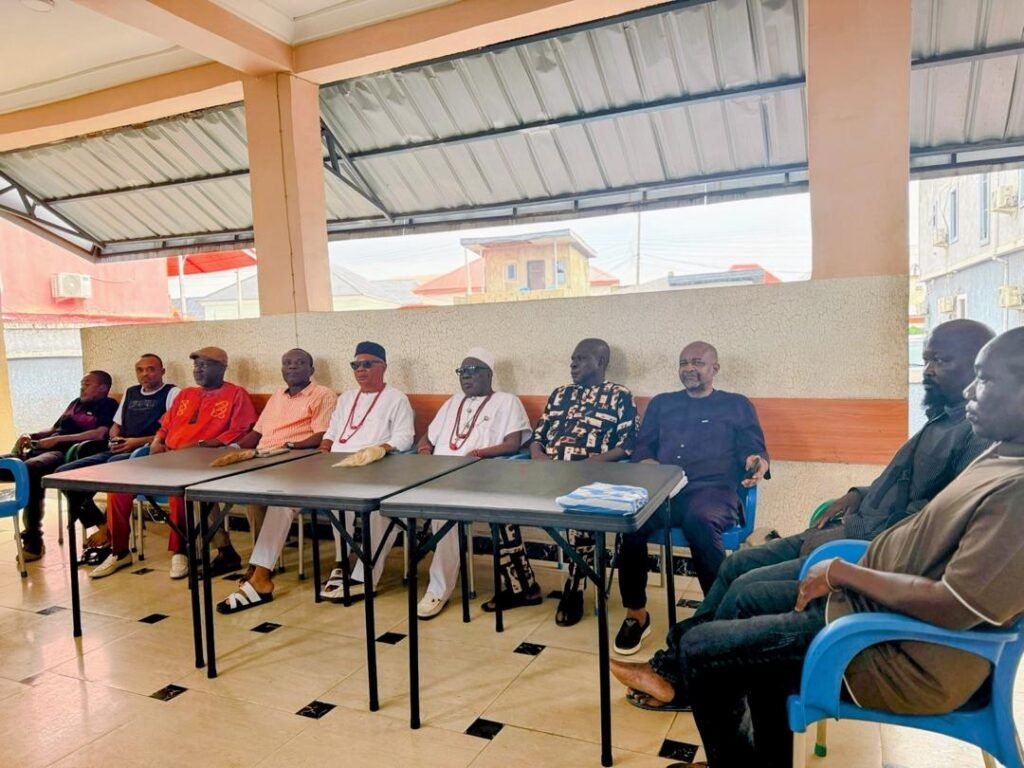
However, members of Group B and representatives of Maltek Resources rejected the allegations at a separate press briefing in Asaba on August 5, 2026.
Speaking on the history of the dispute, Dr Joseph Okolie, a member of Group B, said the crisis resulted in the emergence of two factions within the community.
Okolie said members of both factions had sold portions of land before traditional leaders intervened to resolve the dispute through customary arbitration.
According to him, the agreement reached during the settlement provided that previous land sales by both factions would remain valid.
He said the agreement also provided compensation for families that lost relatives during the crisis and the division of the remaining communal land among the four villages that make up Amachai.
Okolie said both sides accepted and signed the agreement.
He, however, alleged that Group A later denied Group B access to land allocated to it under the settlement and subsequently went to court to challenge the agreement.
According to him, the case lasted from 2012 to 2020, when judgment was delivered in favour of Group B.
He said Group A appealed the judgment but the appeal was later dismissed.
Okolie argued that the court decisions therefore supported the land transactions carried out by Group B, including the sale of land to Maltek Resources.
He alleged that members of Group A had repeatedly disrupted attempts by Maltek to develop the property.
Okolie claimed that a bulldozer belonging to a contractor working on the land was once set ablaze.
He also alleged that several petitions had been written to the Inspector-General of Police, the Delta State Commissioner of Police and Zone 5 Police Headquarters over the dispute.
Defending Morah, Okolie said, “Samuel Morah did not fall from heaven.”
He explained that members of Group B sold land to Maltek Resources and that the company subsequently gave Morah a Power of Attorney to represent its interests and oversee development of the property.
He therefore described the allegation that Morah was a land grabber as misleading.
Morah, who also addressed journalists, said the allegations had affected his reputation and business relationships.
He said he would use legal means to address any alleged defamation against him.
Morah said Maltek acquired the land from members of Amachai community after the community had become divided into two factions.
He said traditional authorities later resolved the dispute through an agreement that recognised previous land sales.
According to him, Group A accepted the agreement but later prevented Maltek from enjoying the benefit of the land it had acquired.
Morah said the dispute went through the courts from 2012 to 2020, adding that Group A appealed the judgment but later withdrew the appeal.
He said Maltek subsequently began the process of enforcing the judgment.
Morah also said a public notice was issued asking trespassers and illegal occupants to leave the approximately 1,800-acre property.
He rejected claims that he was a stranger to Delta State, saying he was from Anambra State but was born and raised in Delta.
“I am not a foreigner. I was born in Delta State and have lived in the state all my life,” he said.
Morah said he was engaged by Maltek as a consultant to protect and manage its interests in the property.
He urged parties dissatisfied with the court decisions to seek legal remedies rather than allegedly disrupting activities on the land.
Also speaking, a representative of Maltek Resources, Simon Chukwuemeka, said the company acquired the property from six persons from Amachai community in 2009.
He said Maltek later discovered that litigation was ongoing over the property and decided to follow the case through the courts.
Chukwuemeka said the High Court eventually ruled in favour of Group B, while an appeal filed by Group A was later dismissed.
He said the two factions subsequently reached an agreement based on the court judgment.
Chukwuemeka said Maltek had remained in possession of the property and had commenced development activities.
He alleged that Friday Okonkwo and some members of Group A had repeatedly disrupted work on the land.
He said Group A could have appealed to the Supreme Court if it disagreed with the Court of Appeal decision but failed to do so.
Chukwuemeka also defended Morah’s presence on the property, saying Maltek had given him a Power of Attorney to enter, develop and oversee the land.
He alleged that some members of Group A were now attempting to reclaim land they had previously sold.
Pastor Dr Florence Madu, wife of Maltek’s late Chief Executive Officer, also supported the company’s position.
Madu said traditional leaders intervened after those who sold the land were taken to court and reached an agreement allowing previous land sales to remain valid.
She said her late husband later began efforts to take possession of the property but allegedly faced resistance.
According to her, Morah was given a Power of Attorney by her late husband before his death to oversee the company’s interests in the property.
Madu said the death of her husband did not terminate Maltek’s claim to the land.
Also speaking, the second Diokpa of Amachai Group B, Ogbuechi Peters Okeleke, urged members of the community to respect decisions reached by the elders.
Okeleke said the dispute had become complicated because some younger members were allegedly challenging decisions previously reached by the elders.
He said the Memorandum of Understanding provided for land allocations to members of the community, compensation for families that lost relatives and recognition of previous land sales.
According to him, the remaining communal land was to be divided into five portions, with four portions allocated to the four component villages and the fifth portion reserved for the community’s central fund.
Meanwhile, counsel to Group B and Maltek Resources, Barrister Emeka Okonkwo, provided a legal explanation of the dispute.
Okonkwo said the 2012 case arose from the crisis in the community, during which the two factions sold portions of land to different people.
He said traditional authorities later intervened through customary arbitration and that the settlement recognised previous land sales.
According to him, Group A challenged the arrangement in court but lost.
He said Group B filed a counterclaim seeking enforcement of the customary arbitration and recognition of the land transactions.
Okonkwo said the court upheld Group B’s position and granted an injunction restraining Group A from interfering with the interests recognised by the judgment.
He said Group A appealed but later withdrew the appeal, leading to its dismissal.
Okonkwo argued that since no further appeal was filed at the Supreme Court, the judgment remained binding.
He said Group B later applied for a writ of execution and warrant of possession, which were executed by court officials in 2024.
According to him, Maltek was subsequently put into possession and a certificate of execution was issued.
The lawyer therefore rejected Group A’s allegation that Maltek unlawfully invaded the property.
He said police authorities had also investigated documents submitted by Maltek and found them to be in order.
Okonkwo further alleged that subsequent complaints against Maltek over alleged destruction of property were investigated but did not establish wrongdoing against the company.
He also disputed Group A’s claim that there was a subsisting injunction preventing Maltek from acting on the judgment.
According to him, the order being relied upon by Group A did not invalidate the execution of a judgment that had already been completed.
The lawyer said the main disagreement was now over the interpretation and implementation of the court judgment and the Memorandum of Understanding, particularly the provision that previous land sales by both factions should remain valid.
The dispute has therefore produced two sharply different accounts.
While Group A insists that Amachai’s ancestral land is being unlawfully taken over, Group B and Maltek maintain that their claims are supported by the community’s peace agreement, court judgments and the execution of those judgments.
As of the time of filing this report, efforts to reach Friday Okonkwo for his response were unsuccessful. Calls placed to his telephone were not answered and he did not return the calls.