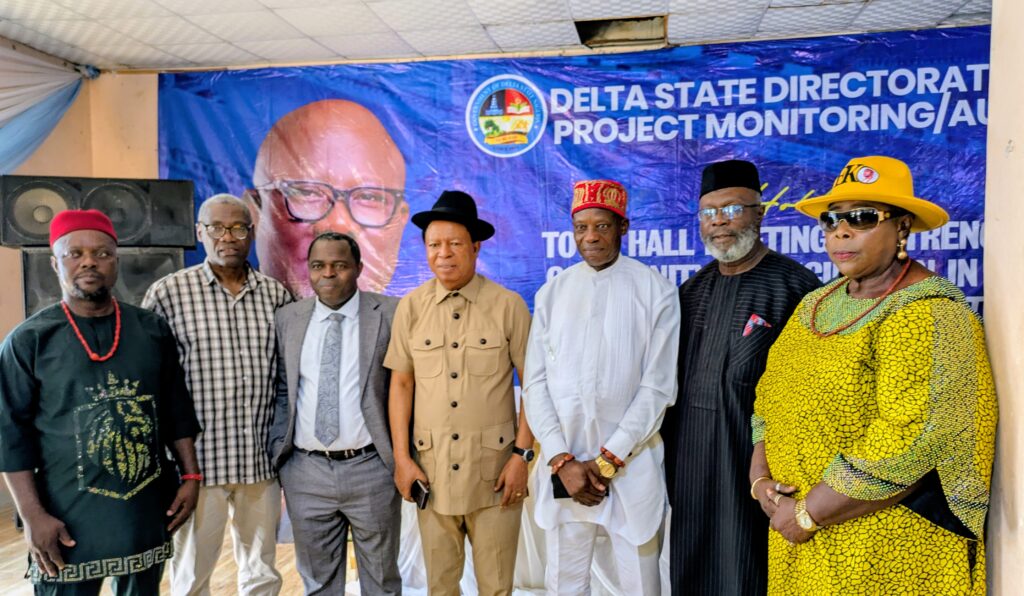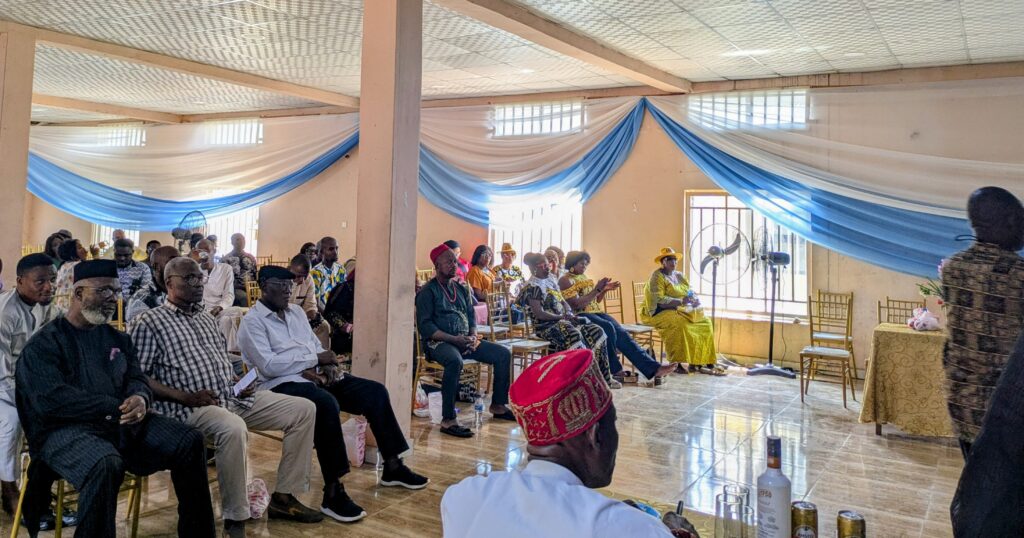


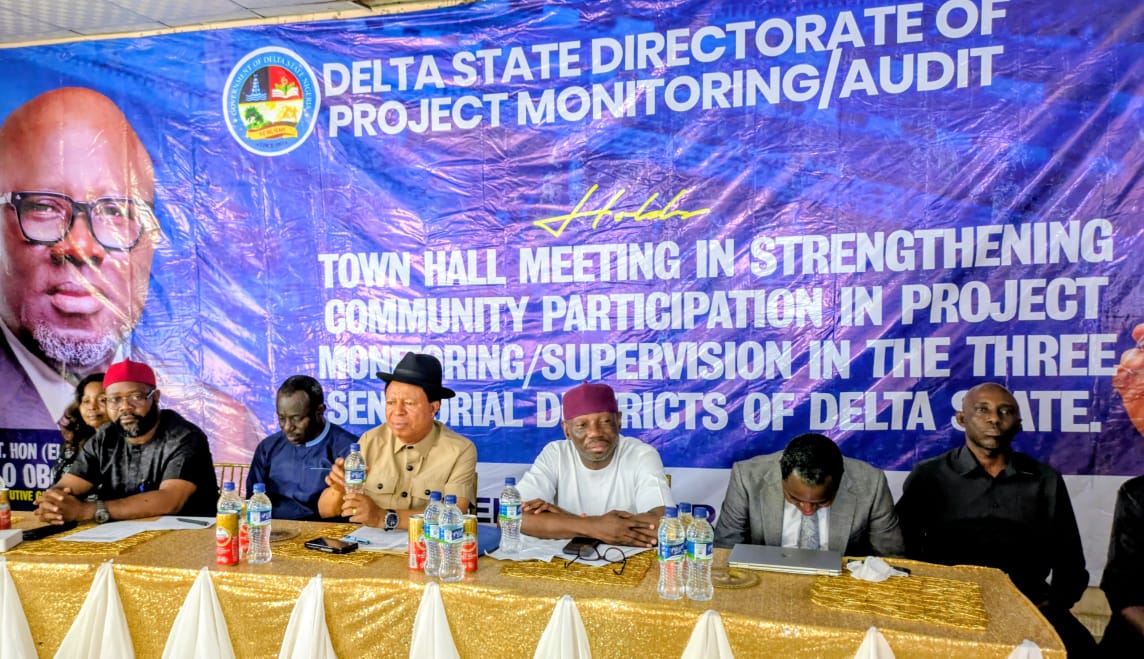
The Delta State Directorate of Project Monitoring and Audit has begun a three-day town hall meeting across the state’s three senatorial districts to strengthen community participation in project monitoring and supervision.
The town hall series, which kicked off on Tuesday, February 3, 2026, at the Council Hall of Oshimili South Local Government Secretariat in Asaba, is aimed at deepening transparency, improving project quality, and ensuring that government projects deliver long-term value to host communities.
Speaking at the event, the Special Adviser to the Delta State Governor on Project Monitoring and Audit, Engr. Dr. Goodnews Agbi, said the initiative was approved by Governor Sheriff Oborevwori to bridge the gap between government-led monitoring and grassroots oversight.
According to Agbi, the state currently has a large number of ongoing projects across its communities, making it impossible for government agencies alone to physically monitor every site.
“Project monitoring is not omnipotent and we are not omnipresent. There are projects going on in the deepest parts of the state, and government cannot be everywhere at the same time,” he said.
He explained that the essence of the town hall meetings is to encourage communities to take ownership of projects located in their areas.
“Any project sited in your community becomes your project. The governor cannot come every day to inspect it. If it is a road, a school, a borehole or a health facility, it is meant to serve you. The community must ensure that the contractor delivers according to specification,” Agbi stated.
He stressed that community involvement is not meant to harass contractors, but to ensure accountability through proper channels by reporting concerns to relevant authorities.
Delivering a keynote address, Mr. Kester C. Ifeadi, Managing Director and Chief Executive Officer of Contemporary Group Ltd, emphasized that communities are the true owners of development projects and must be actively involved from conception to completion.
He noted that many abandoned or failed projects across Nigeria resulted from lack of community consultation and ownership.
“In the past, projects were imposed on communities without consultation. Many ended up as white elephant projects because the people did not feel connected to them,” Ifeadi said.
He explained that structured community participation improves transparency, reduces corruption, and ensures projects are executed according to design specifications.
Using real-life examples, Ifeadi highlighted how community professionals such as engineers, architects, and surveyors can help identify construction errors early—provided they follow proper reporting channels and avoid direct confrontation with contractors.
He warned against negative practices such as harassment, violence, and project capture by individuals posing as community leaders, stressing that such actions scare away investors and delay development.
“Community involvement must be constructive, not destructive. Violence and intimidation will only chase development away,” he warned.
Ifeadi also stressed the importance of maintenance and protection of completed projects, noting that government budgets rarely include long-term maintenance.
“Once a project is completed, it is the responsibility of the community to protect it from vandalism and ensure it lasts,” he added.
Also speaking, Professor Hilary Ijeoma Owamah, Deputy Vice-Chancellor (Academic) of Delta State University, Abraka, said sustainable development can only be achieved when communities feel a strong sense of ownership over projects.
According to him, many infrastructure projects fail prematurely because monitoring and supervision are centralized and disconnected from the people who use the facilities daily.
“When communities are not involved, projects are easily abandoned or vandalised. Development is successful only when projects are carried out with the people, not just for the people,” he said.
Professor Owamah outlined key roles communities should play, including observing project progress, reporting delays, monitoring materials used, and protecting completed infrastructure—without interfering with professional engineering duties.
He called for the establishment of community project monitoring committees made up of traditional rulers or their nominees, youth and women representatives, and technically inclined residents.
He also recommended making community participation mandatory through government policy, including participation clauses in contracts, digital reporting platforms, and whistleblower protection.
“Community participation is not a political favour; it is a development necessity,” he stated.
The traditional ruler of Ubulu-Unor and Second Vice Chairman of the Delta State Traditional Rulers Council, His Royal Majesty Obi Afamefuna Kikachukwu, PhD, commended the state government for the initiative, describing it as a true dividend of democracy.
He praised Governor Oborevwori’s commitment to infrastructure development, particularly in rural communities that have long suffered neglect.
“Many communities have fertile land and economic potential, but without roads and basic infrastructure, they remain cut off. Properly executed projects will unlock their productivity,” the monarch said.
He stressed the need for communities to demand technical drawings and project specifications to ensure contractors deliver quality work, while cautioning against political interference and collusion between contractors and individuals within communities.
“Projects are meant for the people, not for individuals to exploit. When communities partner with government, development will be faster and more sustainable,” he added.
The town hall meeting concluded with a call for peaceful, structured, and transparent collaboration between government, contractors, professionals, traditional institutions, and host communities.
Stakeholders agreed that when communities actively participate in project monitoring through proper channels, projects last longer, public resources are protected, and trust in government is strengthened.
The town hall meetings are expected to continue across the three senatorial districts of Delta State as part of broader efforts to improve governance, accountability, and service delivery.