


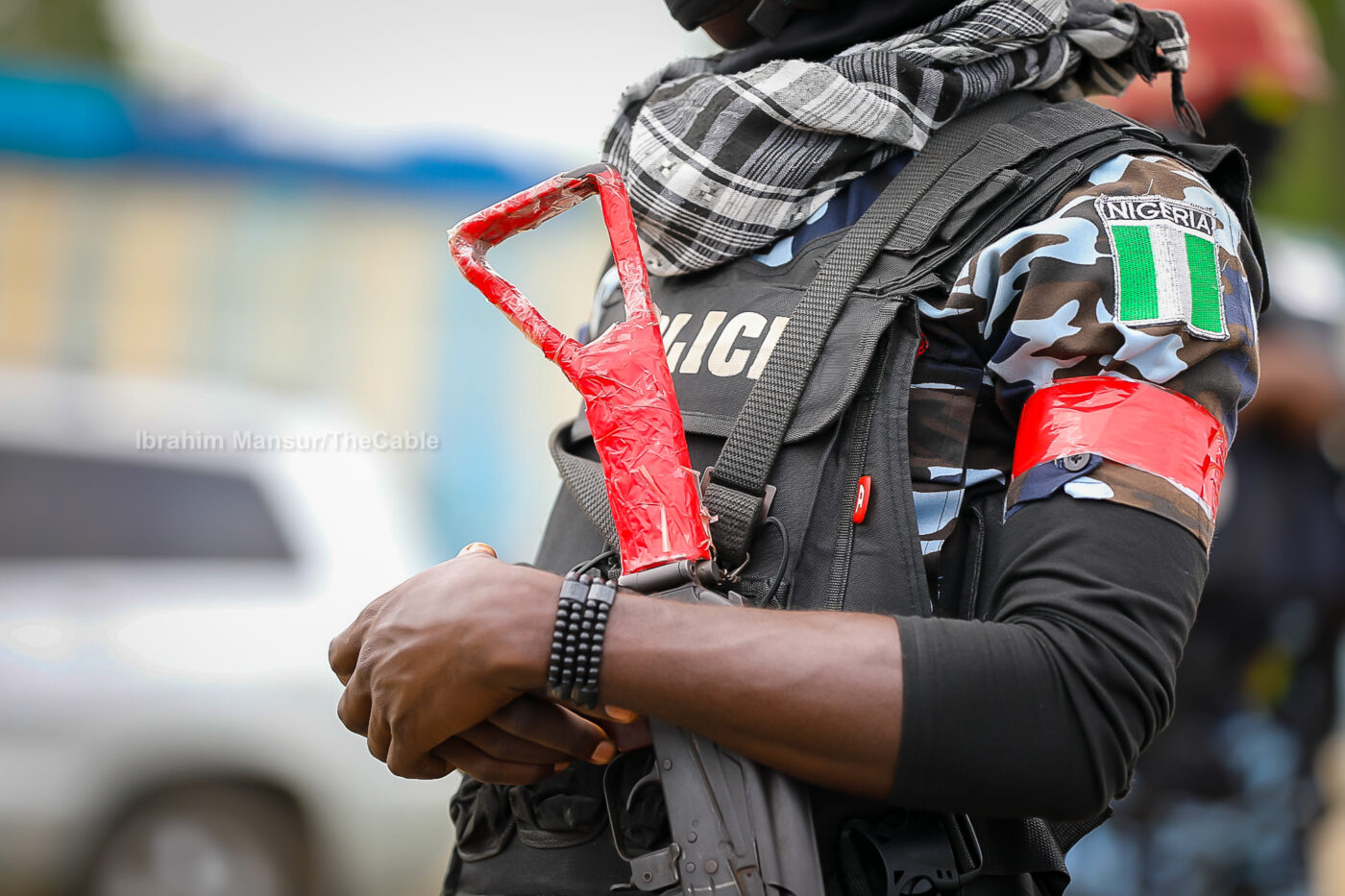
The Federal High Court sitting in Warri, Delta State, has delivered a landmark judgment affirming that Nigerians have the constitutional right to record police officers while they carry out their duties in public.
In a ruling delivered on Tuesday, Justice H. A. Nganjiwa, in suit number FHC/WR/CS/87/2025, declared that citizens are legally permitted to document police activities without interference, as long as it is done in public spaces.
The court also set clear standards for police conduct. According to the judgment, officers must wear visible name tags and clearly display their force numbers while on duty. It further ruled that police officers must not harass, intimidate, arrest, or seize devices from individuals who are recording them.
The case was filed by Maxwell Uwaifo, who accused law enforcement officers of violating his fundamental rights. In its decision, the court awarded him ₦5 million in damages for the rights violation, along with an additional ₦2 million to cover the cost of litigation.
By granting all the reliefs sought in the suit, the court reinforced the rights of Nigerians to freely document police actions, describing such actions as part of constitutional freedoms and public accountability.
Reacting to the judgment, Uwaifo welcomed the decision, describing it as a major step forward for transparency and accountability in policing.
“This judgment has significant implications for policing standards, civil liberties, and public accountability across Nigeria,” he said in a statement shared with journalists. “The court made far-reaching pronouncements on police accountability and citizens’ constitutional rights.”
Legal experts say the ruling could reshape interactions between citizens and law enforcement, strengthening public oversight and promoting more responsible policing practices across the country.