


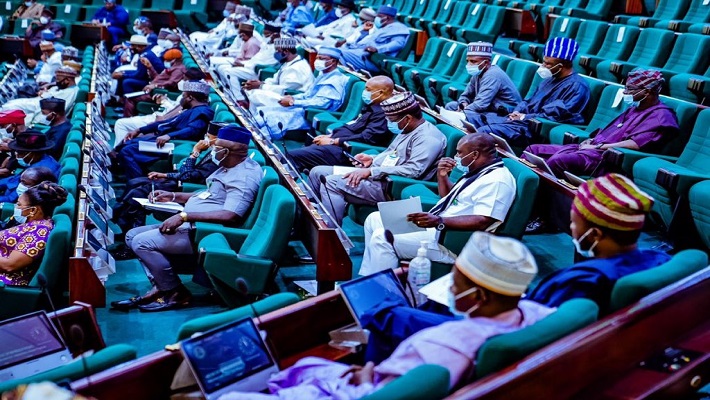
The House of Representatives has passed the second reading of a bill aimed at regulating the employment practices of Nigerian banks, particularly targeting the use of casual and contract staff. The bill seeks to amend the Banks and Other Financial Institutions Act 2020 to “prohibit, criminalise and penalise” the employment of non-permanent workers in the banking sector.
During Thursday’s plenary, Fuad Laguda, the APC lawmaker representing Surulere I federal constituency in Lagos and sponsor of the bill, explained that the law is intended to protect millions of Nigerians from exploitative and unfair working conditions in banks. He said the Labour Act 2004 and the Employees’ Compensation Act (ECA) 2010 currently fail to provide adequate protection for casual and contract employees.
Laguda added that banks rely heavily on casual and contract staff—who make up about 65% of the workforce—to cut costs on pensions, minimum wages, health insurance, promotions, bonuses, study grants, and severance packages. According to him, this practice not only violates Section 7(1) of the Labour Act 2004, which prohibits employment beyond three months without formal recognition, but also subjects workers to emotional abuse, systemic inequality, and mental health challenges.
Citing a 2023 report by the Chartered Institute of Bankers of Nigeria (CIBN), Laguda stressed that the bill would ensure equitable treatment for all employees in the financial sector. He also noted that the proposed law aligns with the Central Bank of Nigeria (CBN) governor, Olayemi Cardoso’s stance that casual and contract bank staff face poor working conditions.
The bill received overwhelming support from lawmakers, who voted unanimously in favour when Deputy Speaker Benjamin Kalu called for a voice vote, signalling strong parliamentary backing for the move to protect bank employees from exploitative employment practices.
This legislative development could mark a major shift in the Nigerian banking sector, ensuring that casual and contract staff receive proper recognition, benefits, and legal protection in line with full-time employees.