


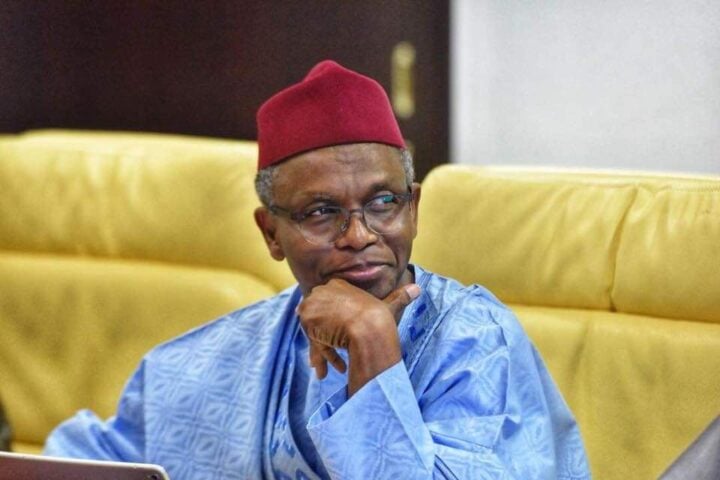
Abuja, April 23, 2026 — The Department of State Services (DSS) has arraigned former Kaduna State governor, Nasir el-Rufai, before a Federal High Court in Abuja over allegations of unlawfully accessing the telephone conversation of the National Security Adviser, Nuhu Ribadu.
El-Rufai, who also served as Minister of the Federal Capital Territory (FCT), is facing a five-count amended charge brought against him by the DSS. The charges were formally presented at the commencement of proceedings on Thursday.
Counsel to the DSS, Oluwole Aladeloye, informed the court that the original three-count charge had been amended to five counts. Following this, the presiding judge, Joyce Abdulmalik, struck out the earlier charges and directed that the amended counts be read to the defendant.
El-Rufai pleaded not guilty to all five charges.
After the plea, the prosecution requested that the court fix dates for trial. However, defence counsel, Oluwole Iyamu, opposed the move, stating that he needed time to properly consult with his client, who he said had been held in the custody of multiple security agencies.
Iyamu also told the court that a bail application had earlier been filed on February 17, alongside a recently submitted further affidavit. In response, Justice Abdulmalik noted that the additional affidavit was not in her court file and questioned the defence’s handling of the filing process.
The judge criticised the defence counsel, stating that proper diligence should have been exercised in ensuring all documents were correctly filed. She also cautioned against what she described as “Nollywood theatrics,” referring to the presence of camera personnel taking photographs inside the courtroom.
Iyamu denied inviting the media personnel.
The court subsequently stood down the matter to allow time for the issue surrounding the missing affidavit to be resolved.
The case stems from remarks made by El-Rufai in February during an appearance on Prime Time, a programme aired on Arise Television. During the interview, the former governor alleged that he had access to a phone conversation involving Ribadu, in which the NSA purportedly instructed security operatives to arrest him.
“He made the call because we listened to their calls. The government thinks they are the only ones that listen to calls but we also have our ways,” El-Rufai had said during the interview.
He further claimed that Ribadu’s phone had been wiretapped, allowing him to obtain the information.
The DSS prosecution is believed to be based on these claims, which authorities argue involve unlawful interception of private communications and pose serious national security concerns.
The case has been adjourned pending resolution of procedural issues and the fixing of trial dates.