


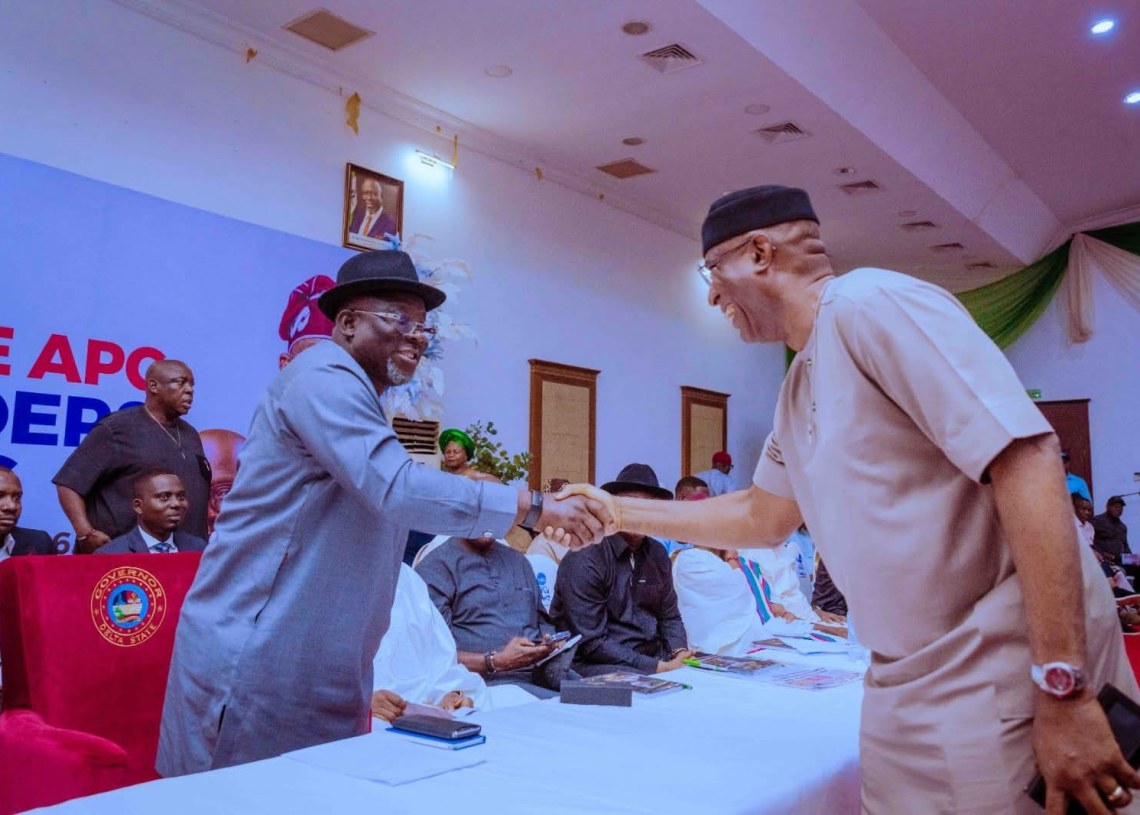
On Friday, top leaders and members of the All Progressives Congress, APC, gathered at the Banquet Hall of Government House in Asaba. The meeting brought together major political figures — Governor Sheriff Oborevwori, Aviation Minister Festus Keyamo, former Deputy Senate President Ovie Omo-Agege, former Governor Ifeanyi Okowa, party chairmen from the three senatorial districts, and other key stakeholders.
On the surface, the meeting focused on unity, electronic registration of members, grassroots mobilisation, and preparation for upcoming party congresses. But when you look deeper, this meeting tells us a lot about APC’s current position and its plans for the future in Delta State.
First, let’s talk about unity.
Governor Sheriff Oborevwori made it clear that leadership must come from the people and be guided by humility, service, and empathy. He warned party members against internal fights, division, and personal ambition. When leaders repeatedly talk about unity, it usually means one thing — the party is aware of internal tensions and wants to prevent them from getting out of control.
Delta State has always been politically competitive. APC knows that internal division can easily weaken the party, especially as congresses and elections approach. That’s why unity was presented as the party’s strongest weapon.
The governor also made an important point: he said the number of votes APC delivers in 2027 will determine how strong the party is and what it can attract at the federal level. In simple terms, APC wants Delta to matter nationally — and votes are the bargaining power.
Next, let’s look at e-registration, which was a major issue at the meeting.
APC is moving toward digital registration of members across the country. The idea is to clean up the membership register, stop multiple registrations, and know exactly how many active members the party has.
Several leaders praised the progress so far, including Aviation Minister Festus Keyamo. He described the exercise as encouraging and said it shows the party is growing and becoming more diverse.
However, district chairmen also admitted there are challenges. Some areas are experiencing technical problems, slow registration, and logistical issues. These problems may sound small, but they are serious. If party members can’t register smoothly, it can affect mobilisation, congresses, and even internal elections.
That’s why some leaders called for patience, better coordination, and quick resolution of technical issues so no group feels excluded.
Now, let’s talk about the big political figures at the meeting and why their presence matters.
Festus Keyamo urged party members to stay focused, ignore rumours, and start early consultations at the grassroots. His message was clear: APC cannot afford chaos or last-minute fights during congresses.
Former Deputy Senate President, Ovie Omo-Agege, thanked Governor Oborevwori for calling the meeting and described his visit to Government House as a sign of inclusiveness. He openly pledged to work in unity with the governor and other leaders.
That statement is important. It shows an attempt to close old gaps and present a united front — something APC desperately needs if it wants to be competitive.
Former Governor Ifeanyi Okowa also spoke strongly about grassroots mobilisation. He urged leaders to take e-registration directly to communities and homes, not just party offices. His message was simple: politics is won at the grassroots, not in conference halls.
He also emphasized inclusiveness and consensus, especially as congresses approach. This is a clear warning — if people feel sidelined, it could create new divisions.
At the party level, the National Publicity Secretary, Felix Morka, praised Governor Oborevwori’s leadership and the digitalisation of the membership register. He recommended that congresses be conducted through consensus rather than open conflict.
Meanwhile, the State APC Chairman, Elder Omeni Sobotie, claimed that over 90 percent realignment has taken place since April 2025. This suggests that APC believes it is gaining strength and unity.
But here’s the critical question: does realignment automatically translate to votes?
Realignment simply means people are coming together or switching sides. It does not guarantee commitment, mobilisation, or turnout on election day. For APC, the real work is turning that claimed unity into active participation at ward and polling unit levels.
Reports from the three senatorial districts further show the reality on ground. While there is relative peace, there are still registration challenges, technical glitches, and the need for clear guidelines from the national body.
The State E-registration Coordinator, Prince Fred Mordi, said Delta was chosen to host the South-South training, which is a positive sign. He also expressed confidence that targets would be met despite minor issues.
The meeting also paused to observe a minute of silence in honour of late Senator Peter Nwaoboshi — a reminder of the political history and figures that shaped Delta politics.
So, what does all this mean?
This meeting was not just about unity speeches. It was a strategic signal. APC is positioning itself early for 2027. The party understands that Delta State is important and that success depends on unity, credible registration, peaceful congresses, and serious grassroots mobilisation.
However, challenges remain — technical issues, potential internal rivalries, and the task of converting unity talks into real votes.
The coming months will reveal whether APC can move from planning to execution — and whether this show of unity will hold when real political contests begin.