


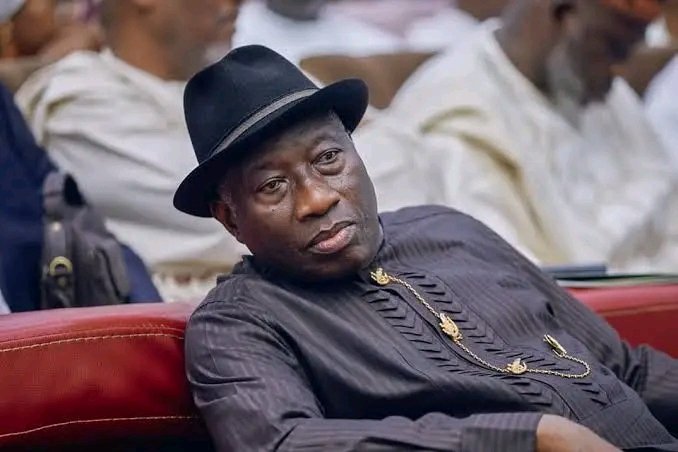
When former Nigerian president Goodluck Jonathan boarded a plane to Guinea-Bissau in late November 2025, he expected a familiar assignment: observe an election, ensure fairness, and return home with a report. He had done this many times for the West African Elders Forum (WAEF).
But what he found in Bissau would spark confusion, suspicion, and—eventually—his bold declaration:
“What happened in Guinea-Bissau was not a coup.”
On Sunday, November 23, 2025, citizens across Guinea-Bissau went to the polls. Jonathan and his team watched from all nine regions of the country.
No violence. No disruption. Votes cast and counted in the open. Results ready for release.
To Jonathan, everything seemed set for a peaceful transition—or at least a transparent result.
Then, on Wednesday, November 26, just as the electoral commission was expected to announce the final numbers, the story changed. Or rather, the storyteller did.
The President Who Announced His Own Arrest
Jonathan was in his hotel when the news broke—not from the military, but from the president himself.
President Umaro Sissoco Embaló began calling international media houses, saying the military had staged a coup and placed him under arrest. Even as he made the calls, no one could confirm he was detained. There were no images of him in custody, no military broadcast, no visible takeover at the palace.
Jonathan found it strange. In his words:
“While it was happening, he was the one calling media organisations to say there was a coup. I am a Nigerian; I know how heads of state are treated when there’s a real coup.”
To him, something about this “arrest” did not add up.
The Soldiers Step Forward — Too Late?
Hours after Embaló’s dramatic announcement, a uniformed officer appeared on television claiming the military had taken over the country. Borders were shut. The election process was suspended. And by November 27, a veteran soldier—Horta N’Tam—was introduced as the transitional leader.
It was the kind of choreography Jonathan had never seen before.
A president declaring his own overthrow?
A military stepping in only after the president announced they had acted?
It looked less like a coup and more like a performance.
Jonathan’s Conclusion: “A Ceremonial Coup”
Returning to Nigeria, Jonathan did not mince words. The entire drama, he said, looked rehearsed.
A “ceremonial coup.”
A staged disruption.
A political manoeuvre designed to block the release of election results.
And Jonathan was not alone: AU, ECOWAS, civil society groups in Guinea-Bissau, and other observer missions all rejected the “coup” narrative.
They had eyewitness reports from every region.
They had seen the ballot boxes counted.
They knew the people’s will.
What they did not know was why the results were suddenly interrupted.
His Final Appeal: Let the People’s Votes Speak
Jonathan’s message to African leaders and regional bodies was simple and urgent:
Publish the results.
Protect the voters.
Do not allow a manufactured crisis to erase democracy.
He warned that allowing this staged takeover to stand would set a dangerous precedent—not only for Guinea-Bissau but for every country fighting for democratic stability.
A Coup Without a Coup
In Jonathan’s eyes, the world did not witness a military power grab in Guinea-Bissau.
It witnessed something more subtle—and possibly more dangerous:
A leader claiming to be overthrown…
A military strangely echoing his script…
And an election result was silenced in the confusion.
It was, in his words,
“a coup without the coup.”
A staged storm.
A democracy interrupted by theatre.
And a continent once again forced to ask:
Who truly holds power when truth itself becomes a weapon?