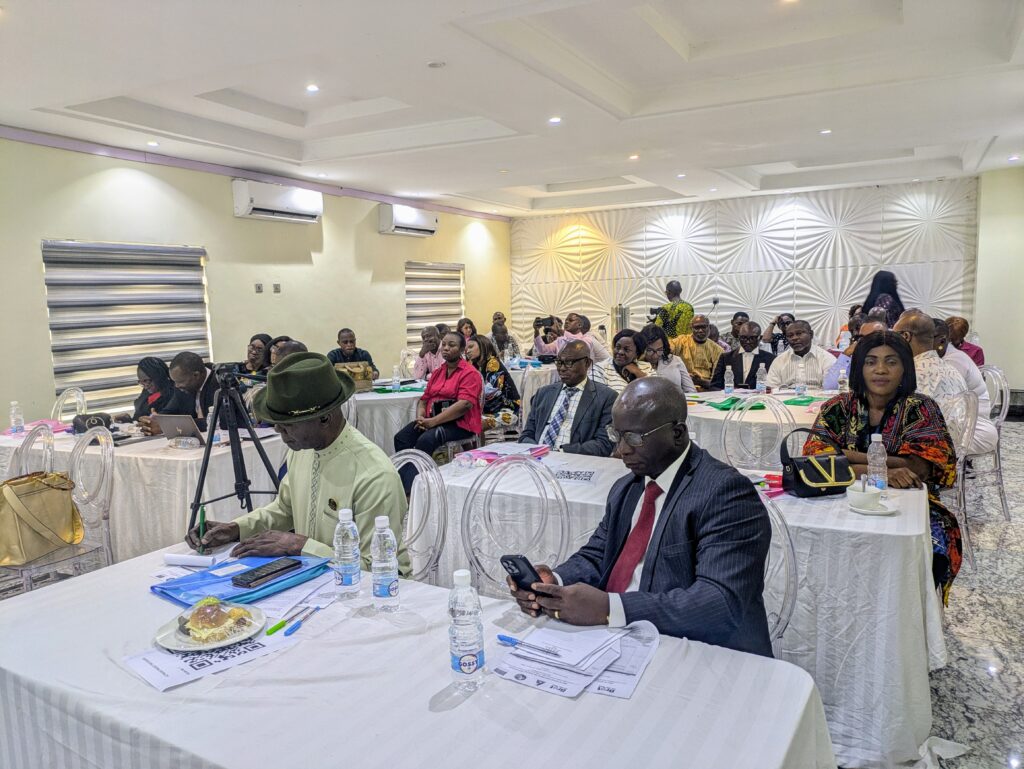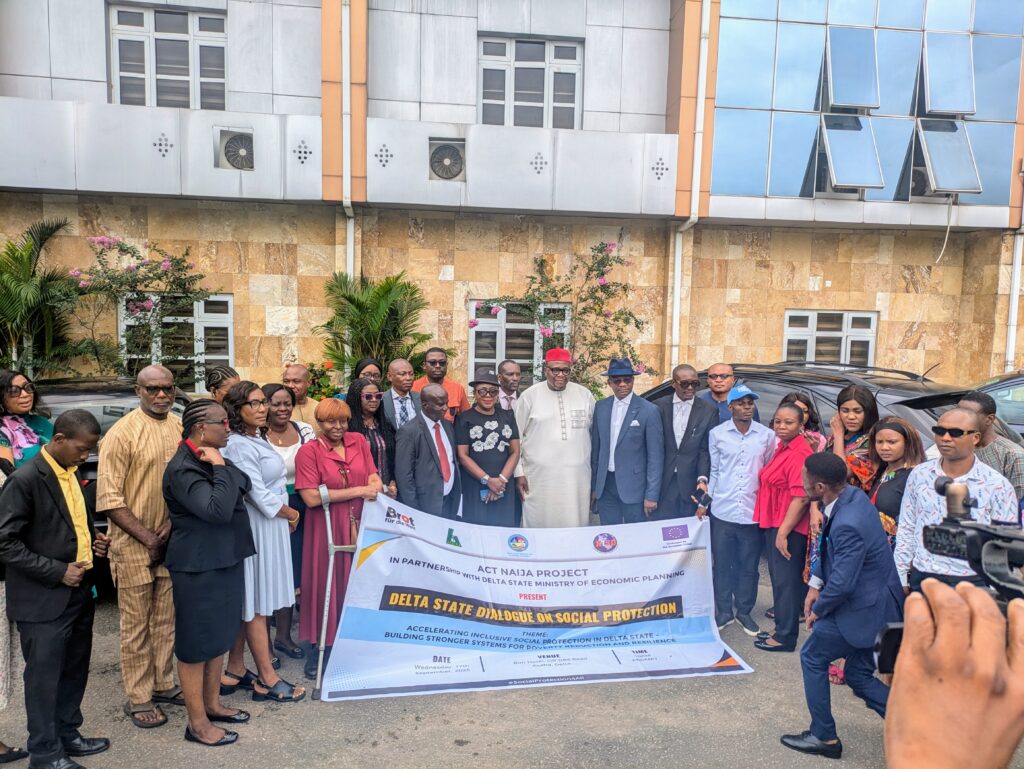


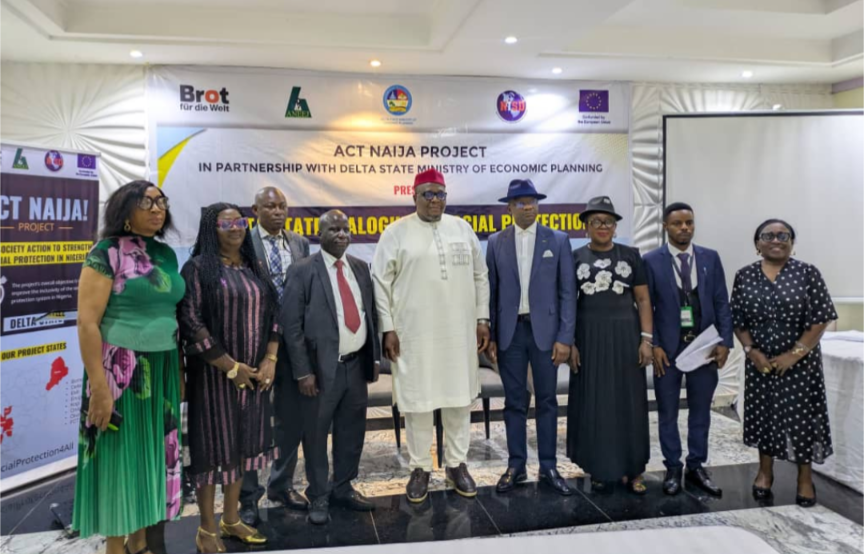
Delta State Deputy Governor, Sir Monday Onyeme, has reaffirmed the government’s commitment to strengthening social protection systems to reduce poverty and vulnerability across the state.
Speaking at a state-level dialogue on social protection held on Wednesday, September 17, 2025, in Asaba, Onyeme said the initiative was in line with Governor Sheriff Oborevwori’s MORE Agenda. He cited the Delta Community Action for Resilience and Stimulus (D-CARES) and the Widows Welfare Scheme as examples of programmes already reaching thousands of residents.
“Accelerating inclusive social protection in Delta State requires a multi-faceted approach,” Onyeme said. “By working together and leveraging partnerships, we can build stronger systems for poverty reduction and resilience.”
Commissioner for Economic Planning, Hon. Sunny Ekadeyan, in his remarks, described the dialogue as timely, stressing that nearly 250,000 residents have benefited from D-CARES through cash transfers, livelihood support, FADAMA farming projects, and direct labour schemes. He added that fertilisers had also been distributed to farmers across the 25 LGAs.
“Our government is committed to creating a more inclusive and resilient community where vulnerable citizens, including persons with disabilities, have access to support,” Ekadeyan said.
The dialogue was organised by the Africa Network for Environment and Economic Justice (ANEEJ) through its Act Naija project, in partnership with the Delta State Ministry of Economic Planning and with support from the European Union.
ANEEJ Executive Director, Rev. David Ugolor, urged the state to give legal backing to its programmes by signing into law the Delta State Social Protection Bill, passed in 2023.
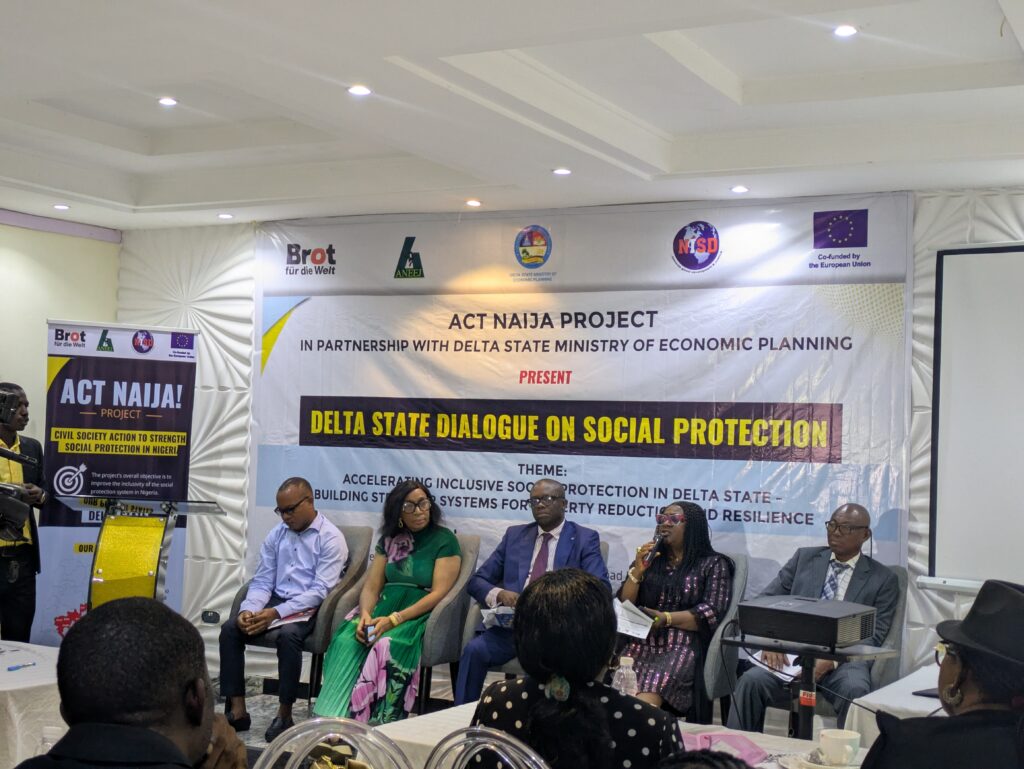
Data from the National Bureau of Statistics shows that 36.3% of Deltans—about 1.5 million people—live in multidimensional poverty, with Delta North worst affected due to rural deprivations, Delta Central hit by youth unemployment, and Delta South battling underdevelopment in its coastal areas.
Stakeholders at the dialogue resolved to push for a unified, transparent, and inclusive social protection framework to improve welfare and resilience across the state.