


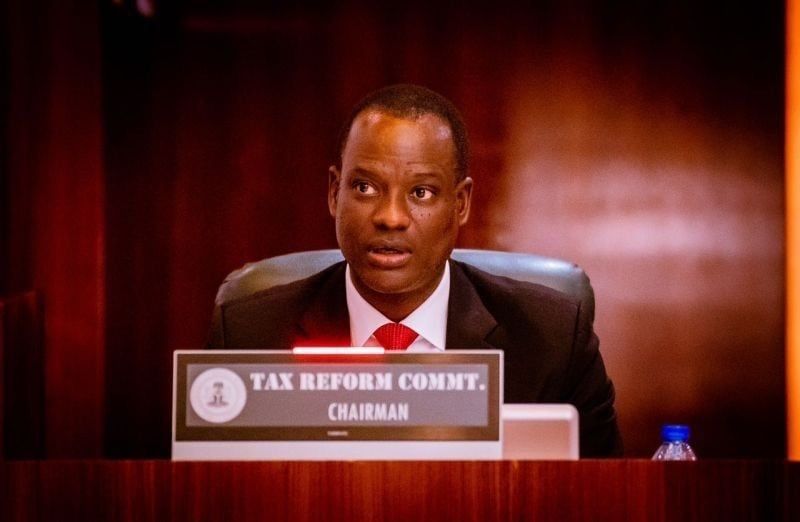
The Chairman of the Presidential Committee on Fiscal Policy and Tax Reforms, Mr Taiwo Oyedele, has called on Nigerians—both individuals and employers—to comply fully with the law by filing their annual tax returns, warning that widespread non-compliance remains a major challenge to effective tax administration in the country.
Oyedele made the call during a webinar organised for human resource managers, payroll officers, chief financial officers (CFOs) and tax managers, in collaboration with the Joint Revenue Board. The webinar, which focused on recent tax reforms and compliance obligations, was published on YouTube on Friday.
Speaking during the session, Oyedele said many Nigerians, particularly individual taxpayers, have failed to meet their legal responsibility of filing self-assessment returns, despite clear requirements under both existing and newly introduced tax laws.
He explained that employers are required to file annual tax returns for their employees, including projections of staff earnings and tax payments for the year, and warned that those yet to comply had only a short window to do so.
“In terms of filing returns, you need to file annual returns as employers for your employees. Many of you may have done that already, but if you haven’t, you have just a couple of days left to file those returns, including projections of how much you will pay your staff,” he said.
Oyedele stressed that individual taxpayers also have a personal obligation to file their returns, noting that compliance levels across the country remain alarmingly low.
“This is one area where we have been non-compliant in Nigeria. In many states, more than 90 per cent— even the most sophisticated states—cannot boast of up to five per cent compliance in filing returns,” he said.
Clarifying common misconceptions, Oyedele noted that employees cannot assume their tax responsibilities end once their employers deduct Pay-As-You-Earn (PAYE) taxes from their salaries.
“Many people assume that if they are employees and their employers have deducted taxes, they don’t have to do anything further. That is wrong. Both under the old and the new tax laws, you must still file your returns,” he explained.
He assured Nigerians that tax authorities are working to simplify the filing process, adding that collaboration between the Joint Revenue Board and state internal revenue services is ongoing to make compliance easier for taxpayers.
Oyedele reminded taxpayers that annual returns must be filed by March 31 each year in respect of the previous fiscal year, stressing that the requirement applies to all income earners, including those on low incomes.
He also disclosed that under the new tax reforms, businesses benefiting from tax incentives are now required to formally disclose such incentives when filing their returns.
“If you operate a business and enjoy certain tax incentives, you now have an obligation to disclose those incentives. There is a specific disclosure requirement for tax incentives, and affected businesses must declare them when filing their returns or shortly after,” Oyedele said.