


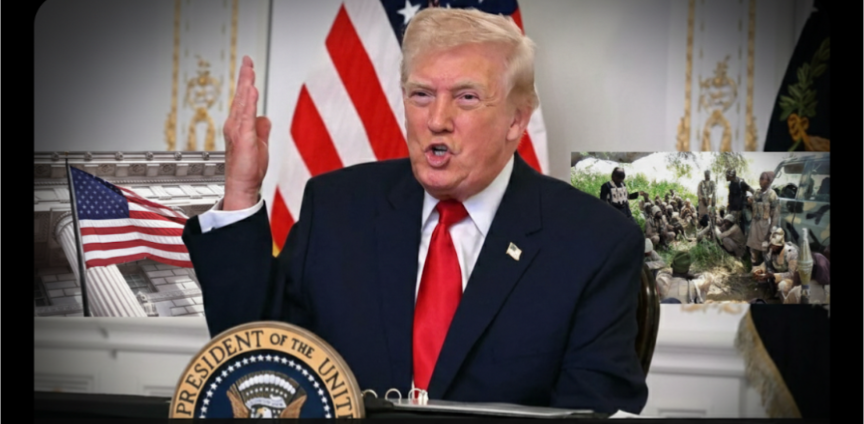
The United States government has imposed financial sanctions on eight Nigerian nationals accused of having connections to Boko Haram and the Islamic State of Iraq and the Levant (ISIL). The action includes freezing any assets they may hold under U.S. jurisdiction and banning American individuals or institutions from conducting business with them.
The sanctions were announced by the U.S. Department of the Treasury through its Office of Foreign Assets Control (OFAC). In a detailed document running over 3,000 pages released during the weekend, OFAC listed the Nigerians among individuals worldwide designated for terrorism-related activities, cybercrime, and other security threats.
According to OFAC, the publication serves as a formal notice that the listed individuals have been added to the Specially Designated Nationals (SDN) list. Being placed on this list means that any property or financial interests linked to them within the United States are blocked, and U.S. citizens are prohibited from engaging in transactions with them.
Among those sanctioned is Salih Yusuf Adamu, also known as Salihu Yusuf, born on August 23, 1990. U.S. authorities linked him to Boko Haram and noted that he was previously convicted in the United Arab Emirates. In 2022, Adamu was among six Nigerians found guilty in Dubai for attempting to transfer approximately $782,000 to insurgent groups operating in Nigeria.
Another individual named is Babestan Oluwole Ademulero, born March 4, 1953, who appears under multiple aliases in the sanctions document.
The list also includes Abu Abdullah ibn Umar Al-Barnawi, also known as Ba Idrisa, who was designated under terrorism-related sanctions. Similarly, Abu Musab Al-Barnawi, also known as Habib Yusuf, was identified as a senior Boko Haram figure.
Khaled Al-Barnawi, who has been linked to Boko Haram activities for years, was listed under several spellings and aliases, including Abu Hafsat and Mohammed Usman.
Also named is Ibrahim Ali Alhassan, born January 31, 1981, reportedly residing in Abu Dhabi, and accused of ties to Boko Haram networks.
Another individual, Abu Bakr ibn Muhammad Al-Mainuki, also known as Abu-Bilal Al-Minuki, was designated over alleged links to ISIL.
The eighth Nigerian, Nnamdi Orson Benson, born March 21, 1987, was sanctioned under provisions relating to cybercrime and related security offences.
Under the sanctions, all property and financial interests belonging to these individuals within U.S. jurisdiction are frozen. In addition, U.S. citizens, companies, and financial institutions are barred from conducting any transactions with them.
OFAC stated that the designations were carried out under Executive Order 13224, a counterterrorism authority that targets individuals and networks involved in terrorism financing and support activities.
Boko Haram was officially designated a Foreign Terrorist Organisation by the United States in 2013, following years of violent attacks across northern Nigeria and the Lake Chad Basin. Since 2009, the group has been linked to thousands of deaths, mass kidnappings, and widespread displacement.
The sanctions come amid growing international scrutiny of security issues in Nigeria. Recently, members of the U.S. Congress reportedly recommended visa restrictions and asset freezes against certain Nigerian political figures and groups over alleged human rights concerns.
The legal framework guiding these sanctions includes several U.S. laws such as the National Defence Authorisation Act (2019), the Arms Export Control Act, and the Foreign Assistance Act of 1961. These laws empower U.S. authorities to block financial networks and apply penalties against individuals accused of supporting terrorism or undermining international security.
The latest action signals continued U.S. efforts to disrupt funding channels and logistical support systems linked to extremist groups operating in West Africa.