


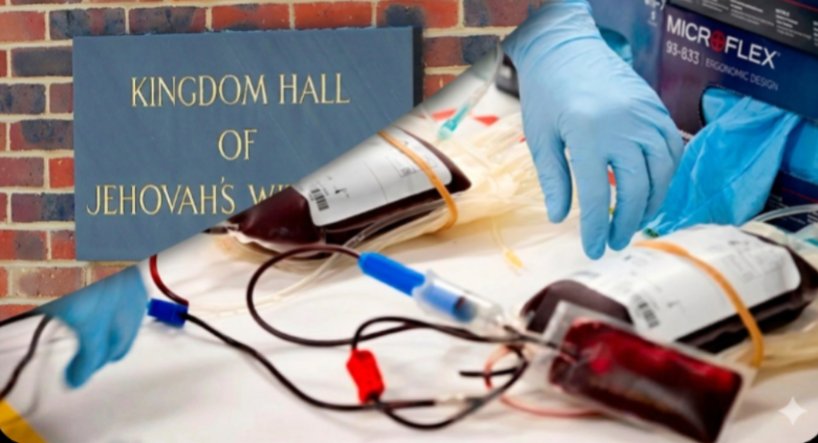
The Jehovah’s Witnesses religious organisation has announced a significant update to its long-standing policy on blood use in medical treatment, giving members the freedom to decide whether their own blood can be used during surgery or other procedures.
The adjustment was made public in a video released on the organisation’s official website on Friday.
Under the revised guidance, members may now choose whether to allow the use of their own blood in medical situations, such as surgeries, tests, or ongoing treatments. This includes procedures where a patient’s blood is collected and later returned to their body.
However, the organisation maintains its long-standing prohibition on the transfusion of another person’s blood, which remains a core doctrinal position.
A member of the Governing Body, Gerrit Lösch, explained that the change is intended to give individuals greater responsibility in making personal medical decisions.
He stated that while the Bible instructs Christians to abstain from blood, it does not specifically address the use of one’s own blood in medical care.
“Regarding the use of one’s own blood, a Christian must decide for himself how his own blood will be handled in the course of a surgical procedure, medical test, or current therapy,” he said.
He added that the decision followed careful consideration of biblical teachings and prayer.
“After much prayer and consideration of the Scriptures, the Governing Body has decided to clarify our position on the use of a patient’s own blood in medical and surgical care,” Lösch explained.
According to the new guidance, members are free to make personal decisions based on their conscience.
“Some Christians may decide that they would allow their blood to be stored and then be given back to them. Others may object,” Lösch said.
“Each Christian must make his personal decision on all matters involving the use of his own blood with regard to medical or surgical care.”
Despite the adjustment, the organisation reaffirmed its position against receiving blood from another person, which continues to guide members in life-threatening situations.
The update reflects a balance between maintaining doctrinal beliefs and allowing individual discretion in certain medical decisions.