


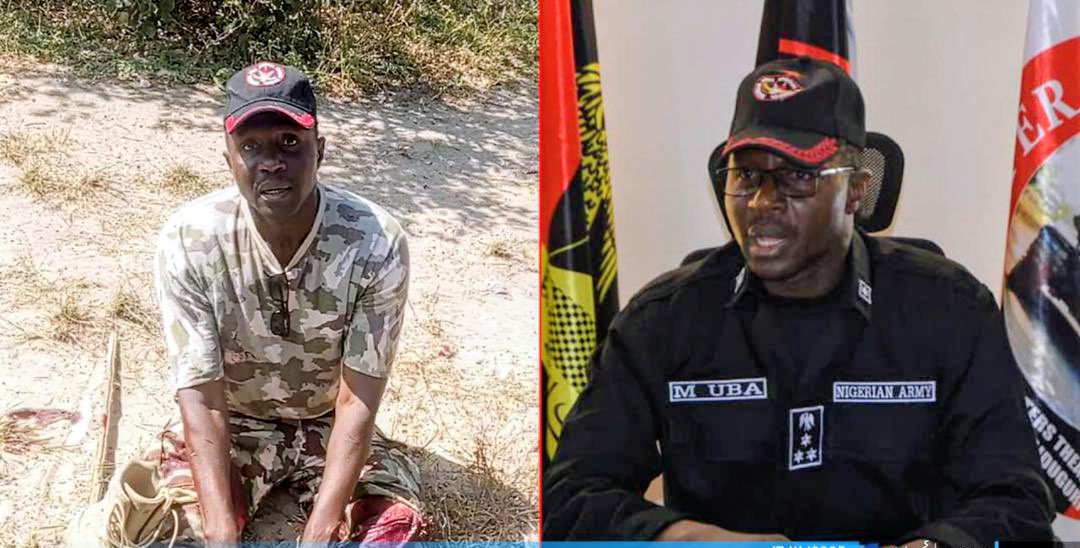
When Brigadier General M. Uba spoke with his superiors after Friday’s fierce gun battle in the Damboa–Biu corridor, he gave a reassuring message: he was safe, his men were regrouping, and the worst of the fighting seemed over. Moments later, the officer—deeply respected by troops and communities across southern Borno—would unknowingly send out what may have been the signal that led terrorists straight to him.
By Saturday morning, the news had spread across barracks and communities: the General had been taken by Islamic State West Africa Province (ISWAP) fighters. What followed was a desperate search that would reveal the dangerous reality of Nigeria’s war against insurgency—where even the most experienced commanders are not spared, and every call, every signal, every decision can turn life into loss.
A Commander Known for Leading From the Front
General Uba was not the kind of officer who issued orders from afar. On Friday night, he led his men himself through a route that turned out to be booby-trapped by ISWAP. What was meant to be a coordinated movement after a successful joint air-ground operation quickly escalated into chaos.
Insurgents, using the terrain they have dominated for over a decade, surrounded the troops in a sudden wave. Gunfire broke out from multiple directions. The commander ordered a tactical withdrawal but refused to abandon his men, even as the ambush intensified.
He radioed for help. And help came.
Nigerian Air Force aircraft diverted from their missions to strike ISWAP positions, clearing enough space for many soldiers and CJTF members to escape. But in the confusion, the terrorists seized General Uba and two soldiers. Two other soldiers and two CJTF members were killed in the ambush.
For troops who survived, the silence of the commander’s voice after the rescue was the first sign that something was terribly wrong.
A Phone Signal, A Brief Video Call, A Race Against Time
Some of the most heartbreaking details came from soldiers who spoke anonymously. The Brigadier General, under duress, managed to send his live location to colleagues. At another moment, he made a video call—not to the Army, but to his dry cleaner—silently signalling distress and warning the man not to speak.
To his colleagues, these clues meant one thing: he was alive and trying to communicate without provoking his captors.
Troops stormed the coordinates he shared, combing through bushes and forest paths. They found nothing except a wounded soldier who had been shot, captured, and later abandoned by the terrorists. The General, however, had been moved—out of sight, out of reach, and slipping toward a fate that every soldier prays never to encounter.
In the early hours of the following day, as rescue efforts intensified, senior military leaders, including Major General Abdulsalam Abubakar, arrived in Damboa to reorganise the search. Morale was low, but hope was not yet lost.
Then came the confirmation no one wanted.
General Uba had been interrogated briefly by ISWAP fighters before being executed. His life—one defined by service, sacrifice, and leadership—was taken in the same region where he had spent years fighting to protect.
Inside the Damboa base, soldiers who served under him struggled to process the news. Many remembered a commander who walked beside them, visited the frontlines, and shared food, worries, and victories with his men.
One soldier said, “He didn’t act like a big officer. He acted like our father.”
Another added quietly, “We tried to reach him. We really did.”
The Army has since appointed Brigadier General Mustapha to oversee the 26 Task Force Brigade as the military regroups. But the shadow of the ambush still hangs heavily over Borno’s troubled landscape.
The death of Brigadier General Uba is more than another statistic in Nigeria’s long fight against insurgency. It is a reminder of the human cost of a conflict that continues to evolve, claiming the lives of civilians, volunteers, young soldiers, and now—one of the country’s most senior field commanders.
For the families waiting at home, the troops who fought beside him, and a country yearning for peace, his death stands as a painful symbol of courage, vulnerability, and the unpredictable dangers of a war that refuses to end.