


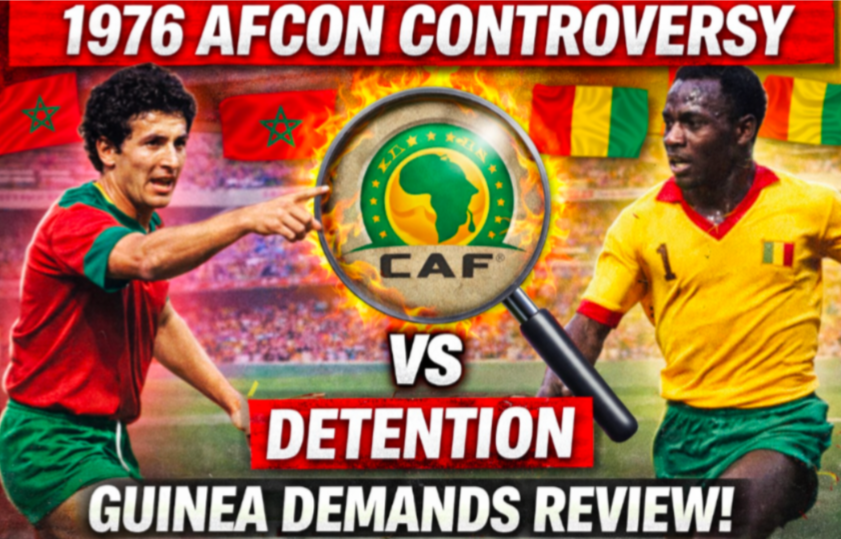
The Guinea Football Federation has called on the Confederation of African Football (CAF) to revisit the outcome of the 1976 Africa Cup of Nations (AFCON), following a recent controversial ruling involving Senegal.
The request comes after CAF overturned the result of the 2025 AFCON final, stripping Senegal national football team of the title despite their on-field victory. The decision was taken as a disciplinary measure after Senegal reportedly walked off during the match. CAF later awarded the title to hosts Morocco national football team, declaring them champions 58 days after the tournament.
In its response, the Guinean federation argued that similar disciplinary standards should be applied to past competitions, particularly the 1976 AFCON tournament.
The 1976 edition was decided using a final four-team round-robin format rather than a traditional knockout final. In the decisive match between Morocco and Guinea, the stakes were clear:
Morocco needed only a draw to secure the title
Guinea had to win to become champions
Guinea took the lead in the 33rd minute through Chérif Souleymane, putting them on course for a historic victory.
During the match, Moroccan players briefly walked off the pitch in protest of a refereeing decision. Although they later returned and resumed play, the incident has now come under scrutiny.
Morocco equalised late in the game, with Ahmed Makrouh scoring in the 86th minute to make it 1-1. The result was enough to give Morocco the शीर्ष position with five points, while Guinea finished second.
The Guinea Football Federation insists that the walkout incident should now be reassessed under the same principles applied in the 2025 AFCON ruling.
“Give us back our 1976 AFCON trophy,” the federation stated, arguing that any team that leaves the pitch during play should face sanctions, even if the match is later completed.
The federation further maintained that if CAF can retroactively overturn a recent result, it should also be willing to review historical matches where similar incidents occurred.
However, sports legal analysts have raised concerns about the feasibility of such a review. They note that CAF regulations, including Article 84—which governs match forfeiture and disciplinary actions—were not in place in 1976.
Experts also point out that football governing bodies rarely apply rules retroactively, especially in cases dating back several decades.
CAF has not yet issued an official response to Guinea’s request. Observers say the appeal could become a major test of the organisation’s consistency and willingness to revisit past decisions.
If pursued, the case may open the door to broader debates about fairness, historical justice, and the limits of retrospective disciplinary action in African football.