


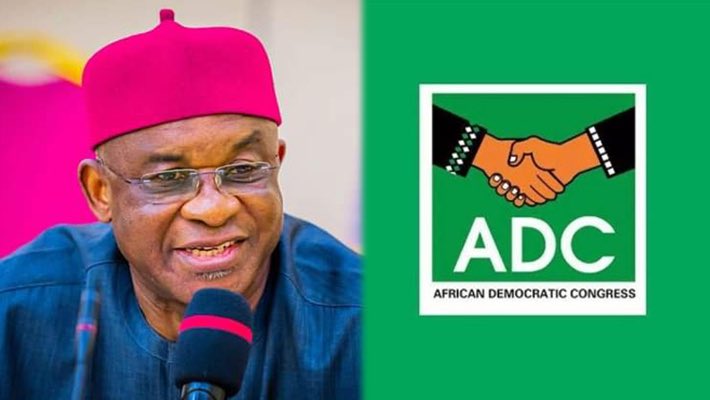
A Federal High Court sitting in Abuja has barred the Independent National Electoral Commission (INEC) from recognising or participating in any state congresses organised by the caretaker leadership of the African Democratic Congress (ADC).
Delivering judgment on Wednesday, Justice Joyce Abdulmalik ruled that the tenure of the party’s state working committees and state executive committees remains valid and subsisting. She held that these structures must continue in office until properly conducted congresses are held and a national convention is convened.
The court specifically restrained the caretaker/interim national working committee of the party, led by former Senate President David Mark, from organising or supervising state congresses. According to the ruling, neither the Constitution of Nigeria nor the ADC’s internal constitution grants such powers to the caretaker body.
Justice Abdulmalik emphasised that the responsibility for conducting state congresses lies with the party’s state executive committees, not the national leadership. She further ordered the Mark-led leadership to desist from interfering in the duties and tenure of duly elected state executives.
The case, marked FHC/ABJ/CS/581/2026, was filed by aggrieved party members, including Don Norman Obinna, Johnny Tovie Derek, Obah Ehigiator, Olona Yinka, Charles Omideji, Samuel Pam Gyang, and Obianyo Patrick. The plaintiffs brought the suit on behalf of themselves and other state chairmen and executive committees of the party.
They argued that the caretaker committee lacked constitutional authority to organise state congresses or appoint committees for such purposes, urging the court to affirm their tenure and halt any parallel arrangements.
In her judgment, Justice Abdulmalik described the plaintiffs’ claims as “meritorious,” noting that the central issue was whether the defendants, including David Mark, had the legal authority to assume powers reserved for elected state organs of the party.
Citing Section 223 of the 1999 Constitution, the judge stated that political parties are required to conduct periodic and democratic elections. She also referenced Article 23 of the ADC constitution, which provides that party officials may serve a maximum of two terms spanning eight years.
On the argument that party matters are internal affairs beyond judicial interference, the court disagreed. Justice Abdulmalik held that courts have a duty to intervene where there is evidence of a breach of constitutional or statutory provisions.
“Where a political party alleges that its constitution has been violated, the court is bound to adjudicate,” she ruled, adding that any claim that the court lacks jurisdiction in such matters is untenable.
The judge concluded by stressing that political parties must strictly adhere to their constitutions, warning that the judiciary will not hesitate to step in whenever there is a clear violation of established rules.