


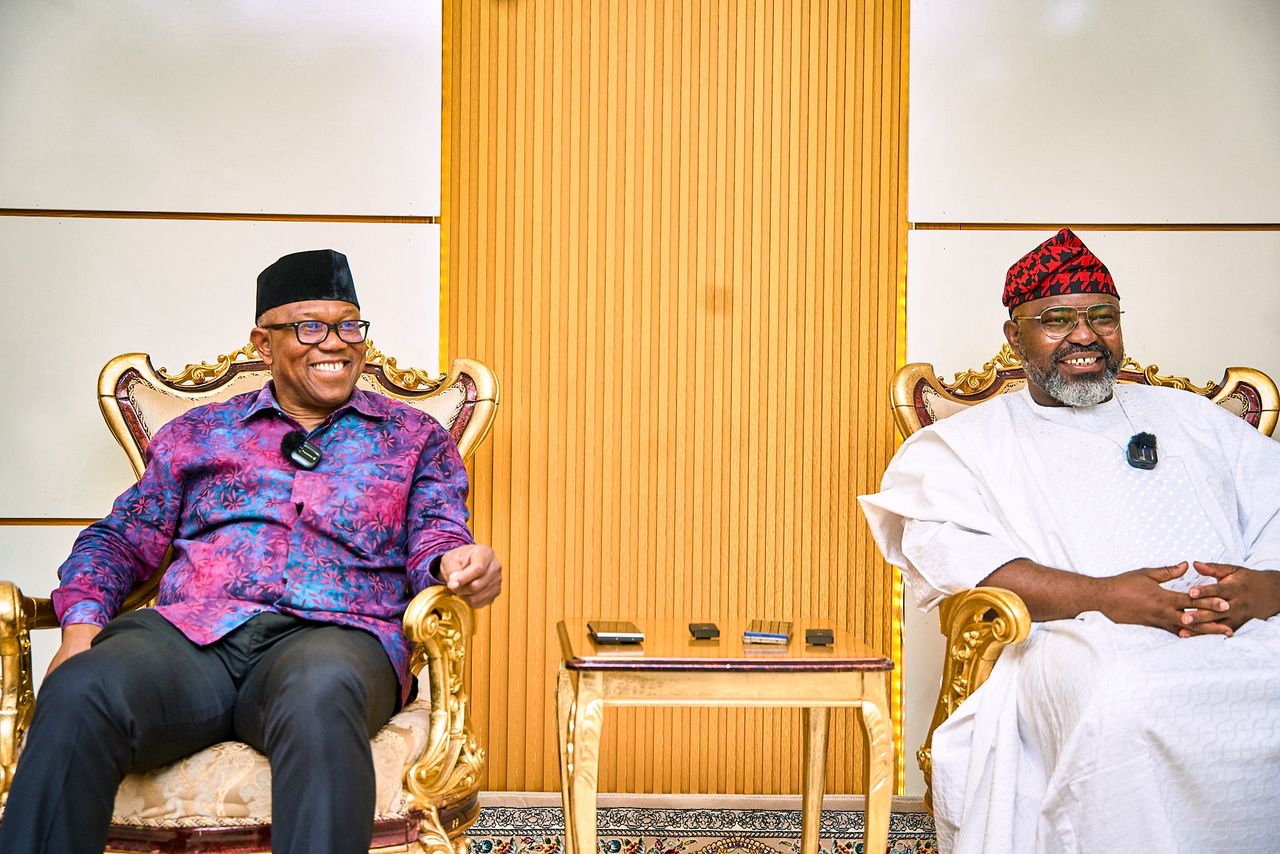
Former presidential candidate of the Labour Party, Peter Obi, has raised concerns over the alleged arrest of a Kaduna-based Islamic cleric, Sheikh Ahmad Tijjani Umar, shortly after the cleric hosted him during a recent visit.
Obi disclosed the development in a post on X on Tuesday, describing the reported arrest as a troubling sign of growing threats to freedom of speech and political expression in Nigeria.
According to Obi, Sheikh Umar was taken into custody by authorities not long after receiving him in Kaduna on Sunday. The cleric is known as a prominent religious leader in the state and is also an aspirant in the gubernatorial race under the African Democratic Congress (ADC).
Obi said he was informed of the arrest early Tuesday morning, expressing concern over the timing and circumstances surrounding the incident.
Reacting to the development, Obi warned that such actions could undermine democratic values and civil liberties.
“This development underscores the deeply troubling state of our nation and our democracy,” he said, adding that freedom of speech and movement appear to be increasingly under pressure.
He cautioned against what he described as harassment and persecution of citizens and perceived political opponents, stressing that such practices have no place in a democratic society.
Obi further called on authorities to uphold the rule of law and respect the principles of democracy in dealing with citizens.
As of the time of filing this report, there has been no official confirmation of the arrest from security agencies, including the Department of State Services (DSS) or the police.
The absence of an official statement has left room for speculation and differing interpretations of the situation.
The development has sparked varied reactions among political observers and supporters.
Some of Obi’s supporters view the reported arrest as an act of political intimidation, particularly as political activities begin to gather momentum ahead of the 2027 general elections.
Others, however, have cautioned against drawing conclusions without verified information, warning that institutional actions should not be prematurely politicised.
The incident, if confirmed, could raise fresh concerns about civil liberties and political tolerance in Nigeria’s evolving democratic landscape.
Analysts note that issues relating to freedom of expression and the treatment of opposition figures remain central to public discourse as the country prepares for future elections.
For now, attention remains on security agencies for clarification, while calls for transparency and adherence to due process continue to grow.