


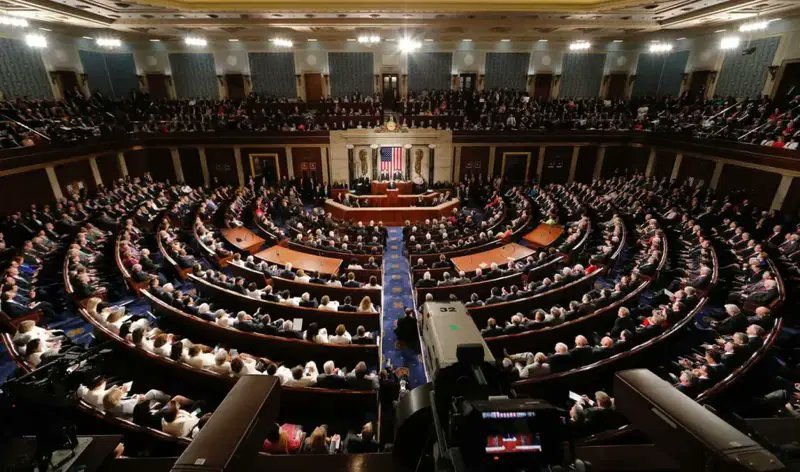
Washington, D.C. — A group of Republican lawmakers in the United States House of Representatives has introduced a new bill aimed at addressing religious violence, illegal mining activities, and the activities of armed groups in Nigeria, sparking both support and controversy among policymakers and analysts.
The proposed legislation, titled the Nigeria Religious Freedom and Accountability Act of 2026, was unveiled on February 10 by Representatives Riley Moore and Chris Smith, alongside co-sponsors Brian Mast, Mario Diaz-Balart, and Bill Huizenga. The bill is designed to push for stronger oversight of U.S. engagement with Nigeria while encouraging efforts to reduce violence and improve religious freedom protections.
If passed, the legislation would require the U.S. State Department to prepare a comprehensive report assessing Nigeria’s response to attacks on Christian communities. The report would also examine the activities of extremist groups such as Boko Haram and other armed factions blamed for violent incidents across parts of the country.
Lawmakers behind the proposal argue that thousands of Nigerians have been affected by violence in recent years, and they say closer monitoring is necessary to ensure accountability and better protection of vulnerable communities.
In addition, the bill calls for a review of U.S. foreign assistance programs to Nigeria, including how American funds are used and whether they contribute effectively to security and stability.
Another aspect of the legislation focuses on Nigeria’s blasphemy laws, with sponsors urging an assessment of how such laws impact religious freedom and human rights.
Beyond religious violence, the bill also highlights concerns about alleged illegal mining activities involving foreign companies, particularly some Chinese operators. Lawmakers claim that certain mining ventures may be paying “protection money” to armed groups described as Fulani militias, potentially contributing to insecurity in mining regions.
The legislation calls on the U.S. Secretary of State to collaborate with Nigerian authorities to address what the sponsors describe as “hostile foreign exploitation” connected to illegal resource extraction. It also proposes stronger international cooperation to tackle illicit mining networks and financial flows that may fuel armed conflict.
These claims partly echo a 2023 investigation by The Times of London, which alleged that some mining operations in areas such as Zamfara State were linked to payments benefiting armed groups. However, those allegations remain widely debated, and independent verification has been a point of contention.
Clauses within the bill suggest that the U.S. government could provide technical assistance to Nigeria to reduce violence from armed militias. Proposed measures include disarmament programs, intelligence sharing, and expanded counter-terrorism cooperation aimed at removing groups considered threats to regional and international security.
The legislation also recommends that the U.S. government evaluate whether certain ethnic-based armed groups meet the criteria for designation as Foreign Terrorist Organisations — a step that could have significant diplomatic and legal implications.
In addition, the bill encourages cooperation with international partners including the United Kingdom, France, and Hungary to promote peacebuilding efforts and protect religious freedoms in Nigeria.
Supporters of the legislation say it represents a necessary response to escalating violence and insecurity, arguing that international pressure could help encourage reforms and strengthen accountability.
However, critics have raised concerns about some of the bill’s claims and the naming of certain Nigerian political figures, including former Kano State governor Rabiu Kwankwaso. Opponents argue that some references may be factually inaccurate or politically motivated, warning that poorly framed legislation could complicate diplomatic relations or inflame tensions.
Analysts also caution that Nigeria’s security challenges are complex and multifaceted, involving criminal networks, local conflicts, and economic pressures — not solely religious or ethnic factors.
The Nigeria Religious Freedom and Accountability Act of 2026 has now been referred to relevant House committees, where lawmakers will review its provisions, debate its accuracy, and determine whether it should move forward in the legislative process.
As discussions continue in Washington, the proposal has already generated debate within Nigerian political and diplomatic circles, highlighting broader concerns about foreign involvement, domestic security challenges, and the global perception of Nigeria’s governance and human rights record.