


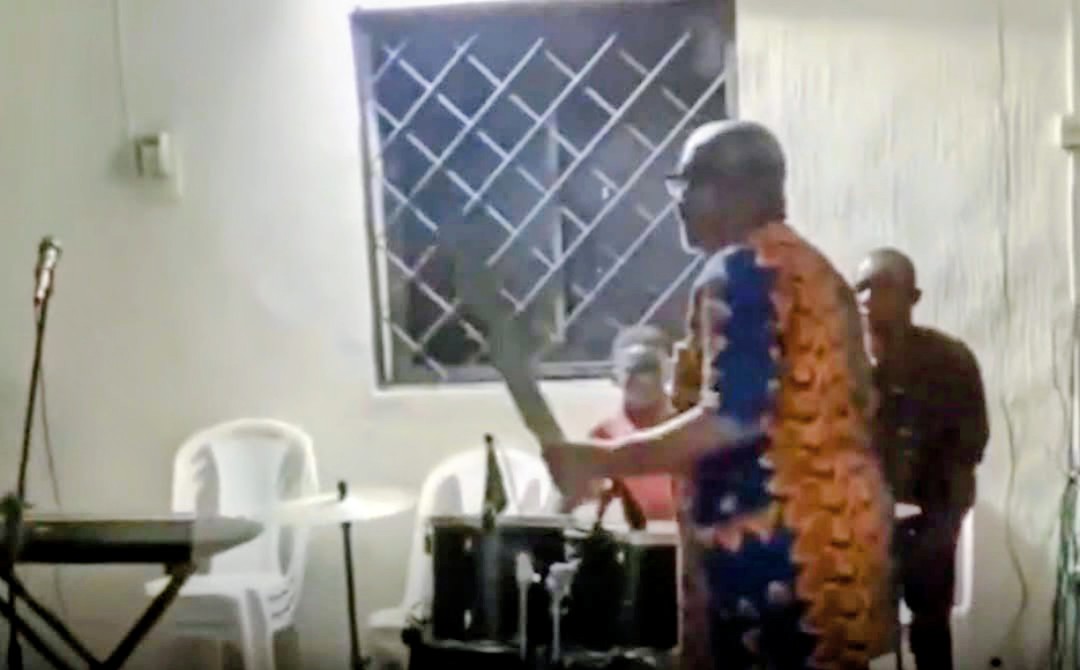
An overnight church vigil in Umuobasi Hall, Umuahia, Abia State, turned tense on January 19–20 after a former state commissioner, Chief Charles Ogbonna, stormed the venue to protest what he described as excessive noise from loud music and singing.
Ogbonna, who lives close to the hall, was reportedly angered by the volume of the vigil, which he said kept his household awake late into the night. A video that later circulated on social media showed the former commissioner holding a cutlass and confronting worshippers at the venue, causing panic among attendees.
Eyewitnesses said families with children and elderly people fled the hall in fear when Ogbonna arrived. In the video, some of his own children were seen stepping in to restrain him and calm the situation. Although no injuries were recorded, some musical equipment was reportedly damaged during the confrontation.
The incident quickly sparked public debate, with many Nigerians condemning Ogbonna’s action as excessive and dangerous, while others expressed sympathy over his complaint about persistent noise from religious activities in residential areas.
The clash has again drawn attention to Nigeria’s long-running struggle with noise pollution, particularly from churches and mosques holding overnight programmes. Environmental regulations, including those by the National Environmental Standards and Regulations Enforcement Agency (NESREA), set limits on permissible noise levels at night, but enforcement has remained weak in many communities.
Civil society groups and residents have renewed calls for authorities to strictly enforce noise-control laws to prevent similar incidents, stressing that grievances should be handled through dialogue and lawful channels rather than confrontation.
As of the time of reporting, there was no official confirmation of police action against either party, but the incident continues to fuel conversations about balancing religious freedom with residents’ right to peace and safety.