


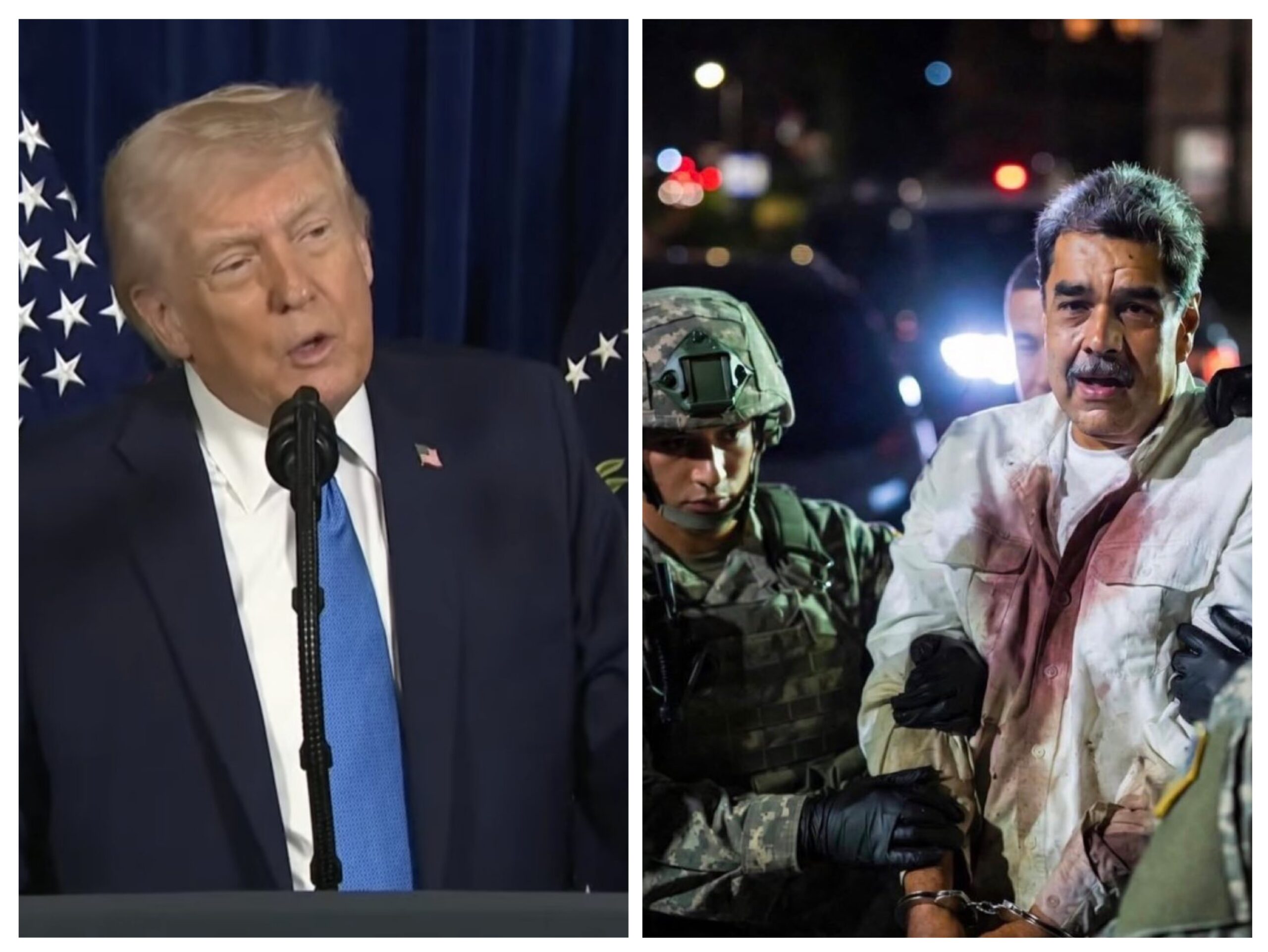
In a dramatic escalation of tensions in Latin America on January 3, 2026, the United States carried out large-scale military strikes on Venezuela, and U.S. President Donald Trump said Venezuelan President Nicolás Maduro and his wife, Cilia Flores, were captured and flown out of the country.
According to Trump, who announced on social media, the operation involved U.S. military forces acting in Venezuela and was successful in seizing Maduro and his wife, who will be prosecuted on charges including narco-terrorism in U.S. courts.
The military action, described as a large-scale strike on Caracas and other regions, prompted explosions and reports of aircraft over Venezuela’s capital. Maduro’s government condemned the attack as a serious act of aggression and labelled it a violation of the country’s sovereignty, while some civilians reported a mix of confusion, fear, and shock in the streets of Caracas.
After the operation, Trump said the United States would temporarily oversee governance in Venezuela and later sell the country’s oil to other nations as part of rebuilding efforts. He framed the intervention as a step toward justice and stability after a long period of pressure on Maduro’s administration.
Venezuelan officials, including Defence Minister Vladimir Padrino, vowed resistance, and countries like Russia called the U.S. action an unacceptable violation of international law, amplifying global concern over the unfolding crisis.
At the same time, voices within the U.S. — including lawmakers from both parties — raised questions about the legality and authority of such a military intervention without explicit Congressional approval, underscoring the complexity and controversy surrounding the events.