


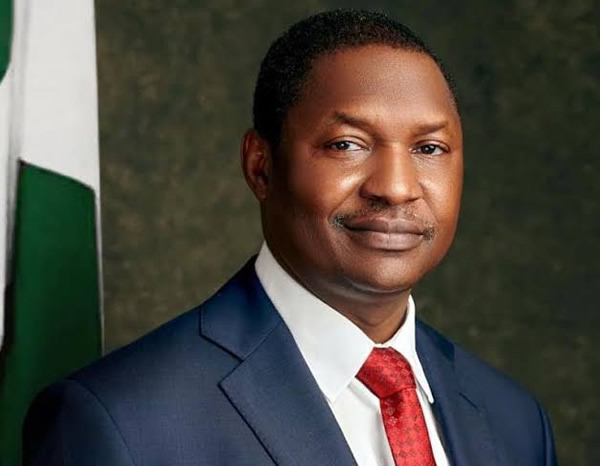
In 2016, barely a year after assuming office as Nigeria’s Attorney-General of the Federation (AGF), Abubakar Malami made a decision that would ignite controversy and suspicion. He hired the services of two Nigerian lawyers — Oladipo Okpeseyi and Temitope Isaac Adebayo — to handle the repatriation of $321 million stolen by the late military ruler, Sani Abacha. On the surface, it appeared to be a routine engagement of legal services. But the move would cost Nigeria an additional $16.9 million in professional fees, raising eyebrows across the country.
The journey to recover Abacha’s loot had started long before Malami came into office. In 2013, under former President Goodluck Jonathan, the federal government recovered and froze the stolen funds in accounts in Liechtenstein and Luxembourg. Swiss lawyers Enrico Monfrini and Christian Luscher had been engaged to secure the funds, with professional fees and expenses totalling about four per cent of the recovered assets. Additionally, Monfrini was paid roughly $6.8 million for his role in the Liechtenstein recoveries.
By 2015, when President Muhammadu Buhari took office, the repatriation process stalled due to a lawsuit filed by the Abacha family. With all fees to the Swiss lawyers already paid, many expected Malami to simply sign a memorandum of understanding (MoU) with Swiss authorities to finalise the transfer of the funds to Nigeria.
Instead, in December 2017, TheCable reported that Malami engaged the two Nigerian lawyers, effectively duplicating the work already done by the Swiss lawyers. Critics quickly labelled it a suspicious “re-looting” of Abacha’s recovered wealth.
Okpeseyi and Adebayo were lawyers to the Congress for Progressive Change (CPC), the political party that later merged to form the All Progressives Congress (APC). Malami had served as legal adviser to CPC — a connection that fueled allegations that the engagement was self-serving rather than necessary.
A senior official in the Ministry of Justice told TheCable at the time:
“A simple letter from the office of our attorney-general to the Swiss attorney-general requesting the repatriation of the funds to Nigeria, consequent upon the signing of an MoU, was all that was required to consummate the deal.”
Following reports of the suspicious engagement, a story surfaced alleging that Monfrini had demanded an additional 20 per cent to “complete the job,” which Malami then countered with a five per cent offer, supposedly prompting the hiring of the Nigerian lawyers.
Monfrini, however, denied the allegation in an email to TheCable in April 2018:
“I never dared to claim additional fees. This figure of 20% is simply invented. I didn’t reject any proposal made by Mr Malami since my fees were already paid a long time before Mr Malami was appointed attorney-general.”
Despite this, Malami later reiterated claims that Monfrini demanded up to 40 per cent of the recovered loot, which was then renegotiated to 20 per cent — claims widely disputed by independent sources.
In December 2017, Nigeria and Switzerland sealed an MoU for the return of the $321 million. Around the same time, TheCable Newspaper Journalism Foundation (CNJF), a non-profit organisation promoting transparency, sent a Freedom of Information (FOI) request to Malami seeking details of the lawyers’ payments and Monfrini’s role in the transaction.
Malami refused to provide the information. In response, CNJF filed a suit against him at the Federal High Court in Abuja on January 10, 2018, seeking a court order compelling disclosure. However, in September 2019, the court dismissed the case, ruling that the foundation had failed to submit certified true copies of its incorporation documents — a technicality that prevented the case from being heard on its merits.
In late November 2025, Malami engaged with the Economic and Financial Crimes Commission (EFCC) regarding the recovery of Abacha loot. In a social media post, he described the meeting as “successful” and noted that he would return for further questioning. The EFCC reportedly focused on the recovery process and the engagement of lawyers, keeping the controversy alive in public discourse.
The $321 million Abacha loot saga is more than just numbers on paper. It’s a story of political connections, allegations of self-interest, and the complexities of recovering stolen national wealth. For Nigerians, it’s also a reminder of the challenges in ensuring transparency and accountability when billions of dollars are at stake.